
Commercial offices and tenant spaces
Commercial access control systems for office entries, staff doors, tenant suites, restricted rooms, shared corridors, card reader installation, and back-of-house access.
Elwin Security installs, upgrades, and retrofits commercial access control across the Bay Area. We plan existing doors, locks, gates, elevators, card readers, keycards, fobs, mobile credentials, wiring, and support together so the system matches how the property actually operates.
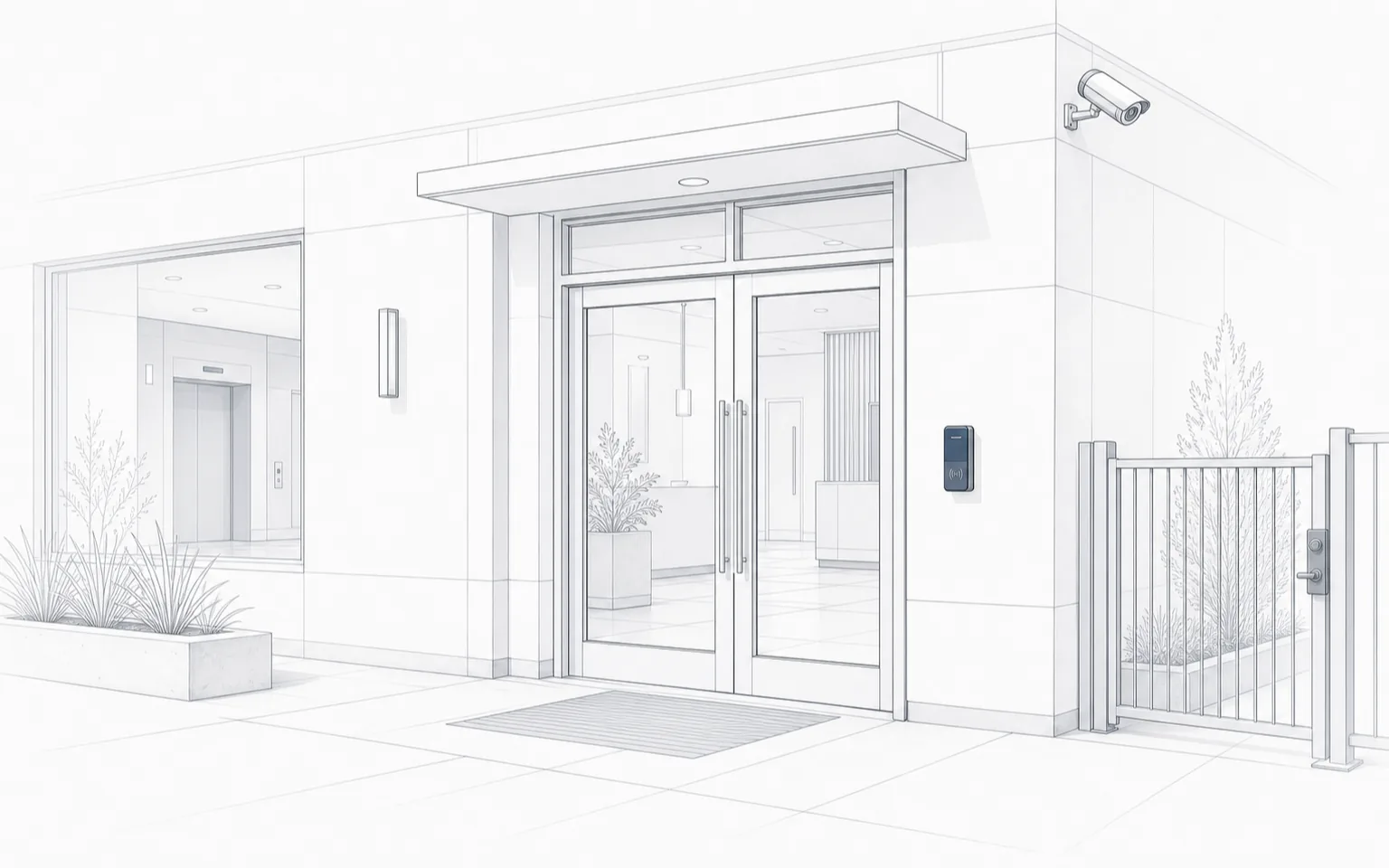
Who this is for
Elwin supports commercial and multifamily property teams in San Francisco, Oakland, San Jose, Fremont, Milpitas, Santa Clara, Sunnyvale, Hayward, San Mateo, and nearby Bay Area cities when a door, gate, garage, amenity space, or shared entry needs better control.
Commercial access control systems for office entries, staff doors, tenant suites, restricted rooms, shared corridors, card reader installation, and back-of-house access.
Multifamily access control installation for resident credentials, visitor entry, package rooms, common areas, garages, deliveries, and property team overrides.
Gate access control installation, elevator access control integration, shared entries, restricted rooms, vendors, deliveries, staff access, and the low-voltage wiring that supports those openings.
Where access control fits
Access control changes based on the building, users, and movement patterns. These are the most common property contexts Elwin plans around.
Commercial access control systems in the Bay Area often need staff doors, tenant entries, restricted rooms, shared corridors, back-of-house access, and daily permission changes.
Apartment, mixed-use, and multifamily properties need resident credentials, garage access, common areas, package rooms, vendor entry, deliveries, and property team overrides.
Gate access control installation and elevator access control integration need to account for vehicle gates, pedestrian gates, elevator permissions, parking flow, and building movement.
Choose the project path
The right path starts with the property's current condition. Elwin checks the opening, locking hardware, wiring, power, system, and daily access workflow before deciding what can stay, what should change, and whether the work belongs in a repair visit or a planned project.
Plan the openings, user groups, credentials, controller locations, release hardware, power, wiring, and handoff together when the property does not already have managed access.
Add a reader, keypad, fob, or supported mobile credential after the door, frame, lock, exit hardware, power, and cable path have been inspected.
Begin with the highest-priority doors or the weakest part of the system, then expand after the property confirms the hardware, credentials, schedules, and management workflow.
Review older readers, controllers, software, credentials, power, wiring, and serviceability before choosing what can be reused and how the property should move to the next system.
Use the repair path when the immediate problem is a failed reader, release, credential, power supply, wiring path, controller, or physical door. Move to a project only when the condition or operating need calls for broader change.
Site walk inputs
A card reader, mobile credential, or access-control platform can only work as well as the opening, hardware, wiring, and access flow behind it. Elwin checks the parts of the property that usually decide whether access control becomes reliable or turns into another service problem.
Main entries, amenity doors, service rooms, gates, garages, frames, locks, electric strikes, maglocks, readers, closers, and opening behavior
Power, conduit, door controller placement, cable paths, existing low-voltage access control wiring, and room for future service
Residents, tenants, staff, vendors, deliveries, visitors, fobs, mobile credentials, schedules, user groups, and property team overrides
Intercom integration, camera integration, gate access, elevator access, and existing access-control system needs
System components
Elwin plans the credential, hardware, power, and integration pieces as one property system instead of a disconnected product list.
Card reader installation, fobs, keycards, and mobile credentials define how people prove who they are and what they are allowed to access.
The controlled opening needs door controllers, electric strikes, maglocks, and hardware that matches the door, frame, and daily use.
Some properties need access control beyond standard doors, including gate access and elevator access.
Access control works best when intercom integration, camera integration, low-voltage wiring, and support are planned together.
Process
The process keeps the property context visible from the first site walk through access control installation, configuration, and handoff.
Elwin starts with the physical site: doors, frames, readers, locks, wiring paths, existing hardware, access flow, and where the system needs to hold up in daily operations.
Result: A clearer scope before hardware gets selected.
The plan explains which openings need control, where card readers belong, what hardware supports them, how credentials should work, and where gate, elevator, intercom, or camera integration points belong.
Result: A plan property teams can review without guessing what goes where.
Card readers, door controllers, locks, strikes, wiring, schedules, permissions, credentials, and user groups are installed and configured around the approved plan.
Result: A cleaner install path and fewer surprises during handoff.
The property team gets a system they can understand, manage, and keep operating after installation.
Result: A system that is easier to understand, manage, and maintain.
Example scopes
The right scope depends on the property. These examples show the kinds of access-control details Elwin plans around before recommending a device list.
Main-entry and lobby access with resident credentials, visitor access, vendor access, delivery flow, and staff overrides
Vehicle and pedestrian gate access with readers, schedules, parking flow, and building entry considered together
Shared-space access for package rooms, fitness areas, pools, restrooms, service rooms, and other controlled common areas
Door hardware, power, conduit, controller placement, and low-voltage wiring planned before readers go on the wall
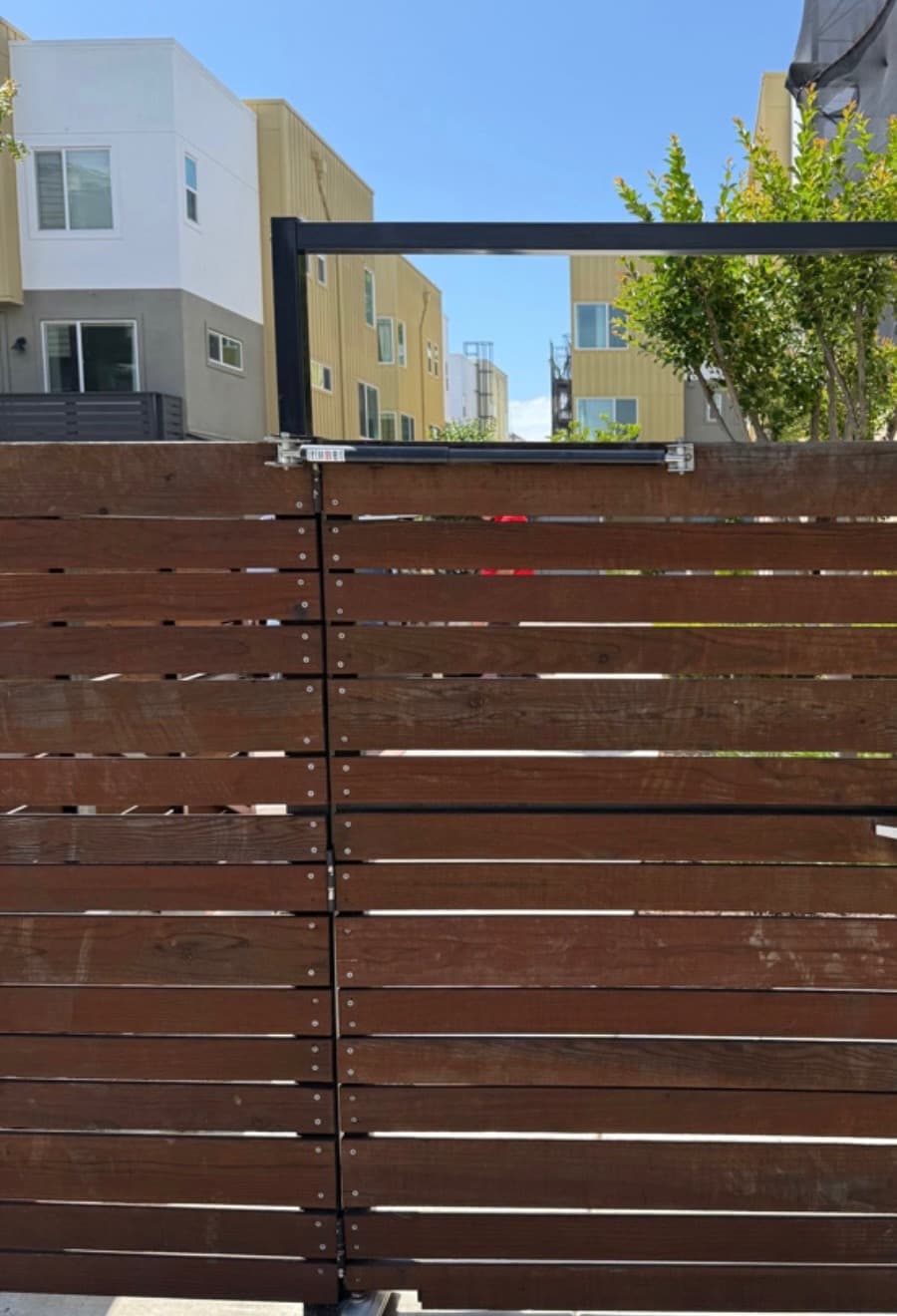
Gate access needs a clean plan for the opening, the hardware, the call point, and the people moving through it.
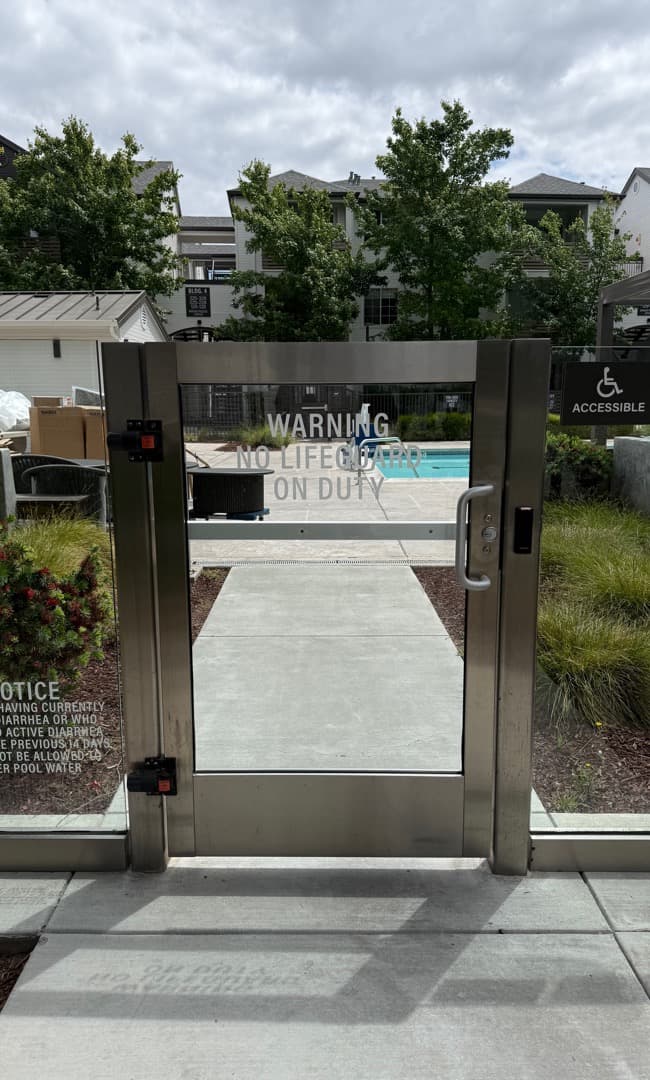
Shared amenity spaces need access rules that match resident use, staff access, safety requirements, and hardware conditions.
Pricing approach
Access control pricing depends on the number of openings, the condition of the doors and frames, wiring paths, controller locations, credential needs, elevator or gate requirements, and integration work. Elwin starts with a site walk so the scope reflects the property instead of a one-size-fits-all estimate.
Access control installation cost depends on the number of openings, door and frame conditions, card reader locations, wiring paths, controller placement, credential needs, gate or elevator requirements, and integrations. Elwin starts with a site walk so the scope reflects the property instead of a generic price table.
Access control
The right access-control plan starts with the doors, gates, garages, amenity spaces, users, credentials, wiring, existing systems, and daily access problems your property team is already dealing with.
Site walk