
Commercial offices and tenant spaces
Commercial security camera installation and video surveillance installation for entries, lobbies, tenant areas, shared corridors, restricted rooms, and exterior views.
Elwin Security installs security cameras for commercial buildings and multifamily properties in Santa Clara and the San Francisco Bay Area, planning entries, parking garages, common areas, corridors, exterior views, camera coverage, low-voltage camera wiring, recording, remote viewing, and support around the property.
Who this is for
Elwin supports property teams when an entry, garage, package area, corridor, or exterior view is hard to understand after something happens.
Commercial security camera installation and video surveillance installation for entries, lobbies, tenant areas, shared corridors, restricted rooms, and exterior views.
Multifamily security cameras for resident entries, package rooms, garages, common areas, corridors, deliveries, and property team visibility.
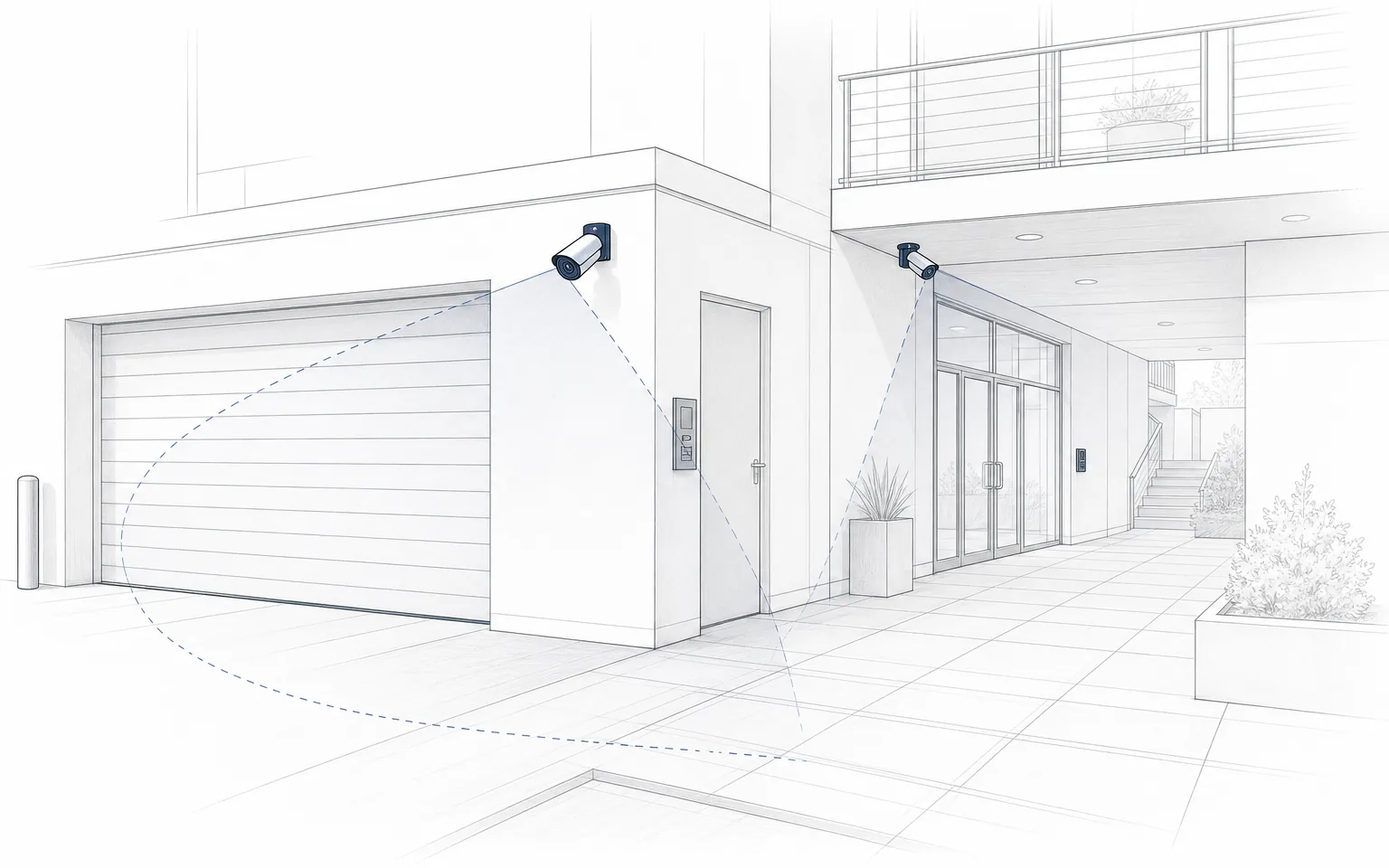
Camera coverage planning for parking garage security cameras, vehicle areas, pedestrian paths, exterior doors, common spaces, and the views property teams need later.
Where camera coverage fits
Security camera installation changes based on the building, coverage goals, lighting, camera placement, wiring, remote viewing needs, and the activity the property team needs to understand.
Video surveillance installation for main entries, lobbies, shared doors, delivery points, visitor flow, and the areas where people first enter the property.
Parking garage security cameras need to account for vehicle movement, pedestrian paths, gate areas, lighting, blind spots, and useful review angles.
Common areas, corridors, exterior views, side doors, and shared spaces need camera placement that helps property teams understand what happened.
Coverage zones
Camera planning usually starts after a property team notices a coverage gap: an entry that is hard to review, a garage with blind spots, or a shared area where better video surveillance would help explain what happened.
Commercial security camera installation often starts at the main entry, lobby, delivery door, or shared tenant entrance where a clear video surveillance view matters most.
Parking garage security cameras need a coverage plan that accounts for vehicle movement, pedestrian paths, lighting, gates, and the angles property teams need for review.
Camera coverage planning should include common areas, corridors, exterior doors, package rooms, remote viewing needs, and the low-voltage camera wiring that supports reliable visibility.
Site walk inputs
A camera system can only be useful if the view, lighting, mounting, low-voltage camera wiring, recorder, remote viewing, and camera coverage plan are built around the property. Elwin checks the areas the property team will actually need to review later.
Main entries, garages, package rooms, common areas, corridors, exterior doors, parking areas, and the moments the property team needs to review
Field of view, blind spots, mounting height, lighting, glare, weather exposure, useful detail, and practical review angles
Power, conduit, low-voltage camera wiring, cable paths, network access, recorder placement, and remote viewing needs
Current cameras, recorders, network conditions, access control, intercoms, gates, and support requirements
System components
Elwin plans the cameras, recording, wiring, mounting, network, and nearby building systems as one property visibility layer.
The camera selection and placement need to match the view, lighting, mounting condition, and daily use.
Recording and access need to fit how the property team reviews events and manages visibility.
Camera reliability depends on clean mounting, power, cable paths, and low-voltage camera wiring.
Camera systems often work better when nearby access and entry systems are considered together.
Process
The process keeps coverage goals and property conditions visible from the first site walk through camera installation, configuration, and handoff.
Elwin starts with entries, garages, common areas, corridors, exterior views, lighting, mounting surfaces, wiring paths, and existing systems.
Result: A clearer coverage plan before cameras get selected.
The plan explains which areas need camera coverage, where cameras should be placed, what low-voltage camera wiring supports them, and how recording or remote viewing should work.
Result: A plan property teams can review before installation starts.
Cameras, mounts, wiring, recorder settings, viewing access, and related system context are installed and configured around the approved plan.
Result: A cleaner install path and fewer blind spots during handoff.
The property team gets a camera system they can understand, review, manage, and keep operating after installation.
Result: A system that is easier to review, manage, and maintain.
Example scopes
The right scope depends on the property. These examples keep the camera story tied to useful views and operating needs instead of a generic camera-count promise.
Resident entries, package rooms, common areas, garages, and delivery paths where property teams need clearer review
Commercial lobbies, tenant areas, corridors, service doors, exterior views, and shared spaces where blind spots create uncertainty
Parking garage and gate camera coverage that accounts for vehicle movement, pedestrian paths, lighting, and useful review angles
Low-voltage camera wiring, recorder planning, remote viewing, and access or intercom context that make the system easier to support
Pricing approach
Security camera installation pricing depends on the number of camera locations, coverage goals, mounting conditions, lighting, low-voltage camera wiring paths, recorder or network needs, remote viewing requirements, and integration work. Elwin starts with a site walk so the scope reflects the property instead of a one-size-fits-all package.
Security camera installation cost depends on the number of camera locations, coverage goals, mounting conditions, lighting, wiring paths, recorder or network needs, remote viewing requirements, and whether the cameras connect with existing access control or intercom systems. Elwin starts with a site walk so the scope reflects the property.
Security cameras
The right camera coverage plan starts with the areas people move through, the incidents your team needs to understand, the available low-voltage wiring paths, remote viewing needs, and the way the building actually operates.
Site walk