
Entries and exits
Main doors, side doors, loading areas, lobby entries, staff entrances, and visitor paths.
Camera systems
Elwin Security installs and supports commercial CCTV camera systems for Bay Area properties, planning camera coverage around entries, parking areas, common areas, exterior views, corridors, service areas, recording, review, network conditions, and property team support.
Use case
Commercial camera systems should be planned around the areas that matter, not just the easiest mounting points.
Main doors, side doors, loading areas, lobby entries, staff entrances, and visitor paths.
Parking lots, garages, vehicle gates, exterior doors, perimeter views, and pedestrian routes.
Shared interiors, corridors, service areas, storage rooms, package areas, and places the team may need to review.
Service focus
Elwin frames the scope around the camera views the property team actually needs.
Coverage should match entry flow, blind spots, lighting, exterior exposure, and expected review needs.
The recorder, network, storage approach, and user access should support practical review by the property team.
Cameras near doors, gates, and intercoms can help property teams understand access events and visitor movement.
Site walk
The site walk connects camera locations to the actual review problem.
Entries, exits, parking areas, exterior doors, common spaces, corridors, blind spots, and high-friction areas.
Day and night conditions, backlighting, glare, shadowed areas, exterior exposure, and mounting angles.
Existing cameras, recorder, network, cabling, conduit, power, equipment rooms, and mounting surfaces.
Who reviews footage, what they need to find, how often they review, and where access should be managed.
System layers
Camera placement, network conditions, recording, viewing, and support all affect the outcome.
Entries, exits, parking, exterior areas, common spaces, corridors, and points of review.
Recorder or platform planning, storage expectations, retention needs, and review workflow.
Network conditions, cabling paths, conduit, mounting locations, power, and equipment placement.
User access, viewing permissions, handoff, troubleshooting, and future camera additions.
Process
Elwin scopes camera systems around property-specific review needs, then ties those views to the required infrastructure.
Identify the events, areas, entries, and exterior views the property team needs to understand.
Result: The camera plan has a clear purpose.
Coordinate camera placement, recorder or platform needs, cabling, power, network, mounting, and viewing access.
Result: The scope accounts for the full camera system.
Install cameras, configure viewing and recording, confirm coverage, and hand off support expectations.
Result: The team can review the property with more confidence.
What matters
A stronger CCTV plan starts with coverage goals, then backs into hardware, placement, wiring, and review workflow.
Camera placement should be chosen for useful views, not only easy mounting.
Parking and exterior coverage often need different angles than interior entries.
Review access and recording expectations should be clear before installation.
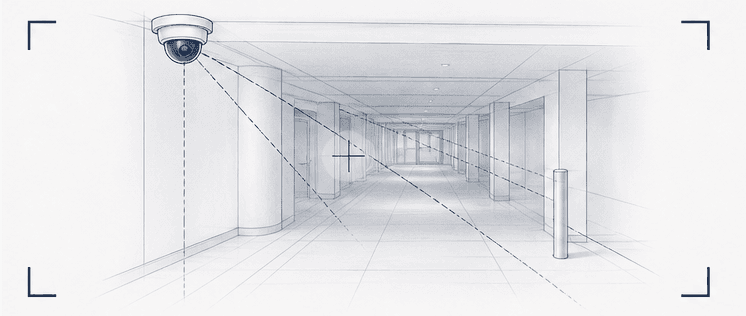
Commercial camera planning should identify the areas where visibility is missing or hard to review.
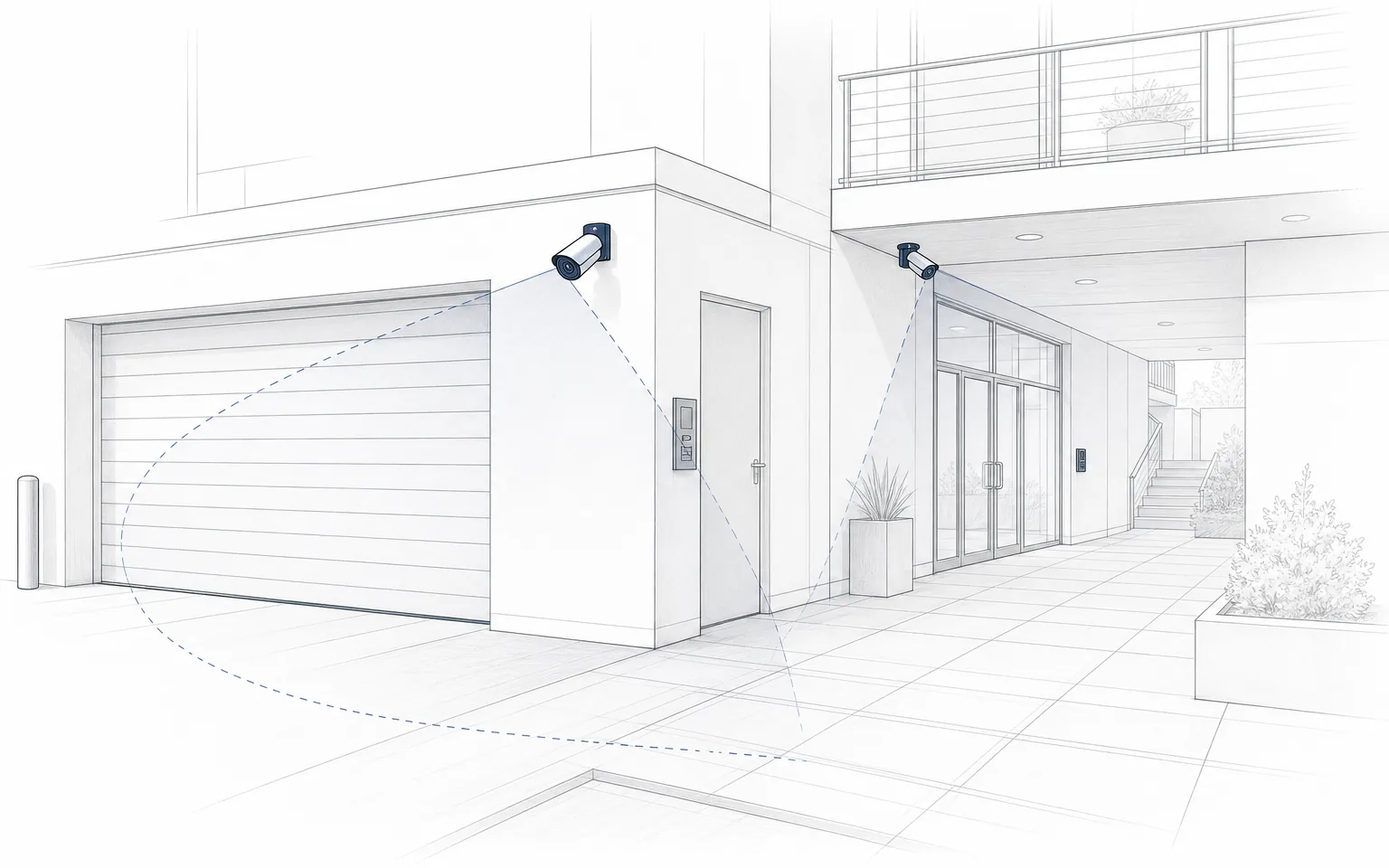
Camera views should connect to entries, parking, common spaces, and the property team's review workflow.
They overlap. CCTV usually points to a full camera system with coverage, recording, review, network, user access, and support, not only individual camera placement.
Site walk
Tell Elwin what is not working, what systems are already on site, and which access points matter most. The next step is a scope grounded in the building, not a generic product list.
Site walk