
Garage and parking entries
Vehicle gates, garage entries, resident parking, tenant parking, visitor access, and after-hours control.
Access control
Elwin Security plans gate access control systems for Bay Area commercial and multifamily properties, coordinating vehicle gates, pedestrian gates, credentials, mobile access, intercoms, gate release, cameras, low-voltage wiring, and support around how people actually enter the property.
Use case
Gate access has to handle expected users and occasional visitors without creating a weak point at the property edge.
Vehicle gates, garage entries, resident parking, tenant parking, visitor access, and after-hours control.
Pool gates, amenity gates, side entries, resident paths, vendor access, and staff overrides.
Intercom calls, remote release, delivery access, vendor entry, and camera context around the gate.
Service focus
The scope starts with who needs in, what opens the gate, what verifies activity, and what wiring supports it.
Garages and parking gates need a plan for residents, tenants, staff, vendors, visitors, and tailgate risk.
Cards, fobs, keypads, mobile credentials, and schedules need to match the property's daily access rules.
Gate intercoms and cameras help the property team understand who is requesting or using gate access.
Site walk
A gate access plan has to account for movement, release, equipment placement, and the surrounding property conditions.
Operator type, release behavior, vehicle loop context, pedestrian flow, and daily traffic.
Residents, tenants, staff, vendors, visitors, deliveries, and emergency or property team access.
Reader, keypad, intercom, camera, controller, power, and conduit locations.
Access control, intercoms, cameras, lighting, parking flow, and existing wiring.
System pieces
A gate access scope is shaped by operators, readers, intercoms, cameras, cable paths, power, and property flow.
Vehicle gates, pedestrian gates, pool gates, garage gates, and service entries have different requirements.
Credential, fob, card, mobile, keypad, remote release, or staff override decisions.
Intercoms, visitor calls, cameras, lighting, and traffic patterns around the gate.
Power, conduit, low-voltage wiring, reader placement, and equipment locations.
Process
The workflow matters because vehicle gates and pedestrian gates affect how people enter, wait, and move through the property.
Review how vehicles, pedestrians, deliveries, and staff use the gate throughout the day.
Result: The access plan is tied to real movement.
Plan readers, keypads, mobile credentials, intercoms, cameras, gate release, power, and wiring.
Result: The gate works with the broader access system.
Install the equipment, configure permissions, test gate behavior, and support the property team.
Result: The property gets a controlled entry point it can manage.
Field proof
The gate is often where visitor entry, vehicle movement, cameras, and access control overlap.
Reader placement should match how drivers or pedestrians approach the gate.
Intercom and camera context can help property teams understand remote release decisions.
Low-voltage paths, power, and equipment locations shape long-term support.
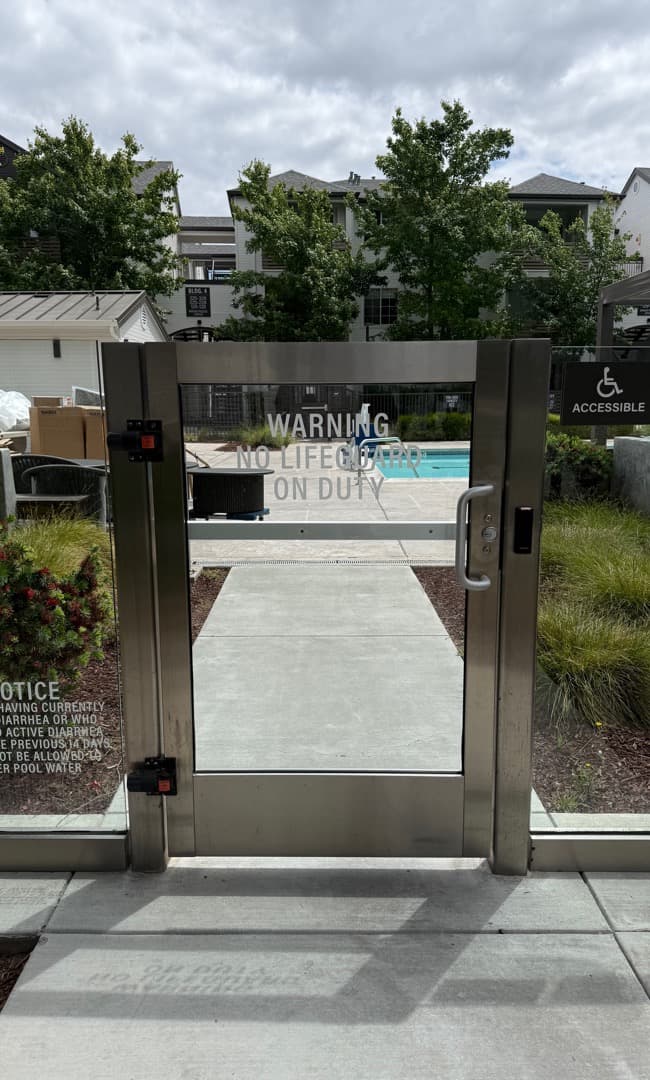
Reader placement should match the way people actually approach and use the gate.
Often, yes, but the scope depends on gate type, user groups, reader placement, release behavior, power, wiring, and how the property wants to manage permissions.
Site walk
Tell Elwin what is not working, what systems are already on site, and which access points matter most. The next step is a scope grounded in the building, not a generic product list.
Site walk