
Closer symptoms
The door slams, closes too fast, closes too slowly, will not latch on its own, or is leaking hydraulic fluid down the door face.
Door hardware
Elwin Security repairs, adjusts, and replaces commercial door closers, panic bars, and exit devices. A door that slams, will not latch, closes too slowly, or leaks hydraulic fluid is a service call, not a project. New installation is available when replacement makes more sense than repair. For a single opening, request service through the contact page; request a site walk for multi-door projects.
Use case
Closer and exit-hardware problems show up as daily friction long before they show up as a security failure. Most of this work is repair and adjustment on hardware that is already installed.
The door slams, closes too fast, closes too slowly, will not latch on its own, or is leaking hydraulic fluid down the door face.
The panic bar will not latch, sticks when pushed, hangs half-open, or no longer secures the door after hours.
We service hardware on fire-rated doors using listed, compatible components. Your fire marshal or AHJ determines compliance.
Service focus
Say what the door is doing. The underlying cause may be closing speed, latching speed, worn hardware, or the exit device itself.
Closing speed controls most of the swing. Latching speed controls the last few inches that pull the door into the latch. Backcheck controls the door during opening. Each one adjusts separately, and adjustment is often the whole fix.
A closer leaking hydraulic fluid has failed internally and gets replaced, not adjusted. Surface-mounted and concealed closers, door coordinators on paired doors, and hold-open behavior are scoped at the opening.
Rim devices latch at the door edge. Vertical-rod devices latch at the top and bottom of the door. Both wear differently, and both can be repaired, rebuilt, or replaced — including alarmed exit-door hardware and multipoint panic hardware; your AHJ determines compliance.
Door hardware, locks, strikes, maglocks, power, and wiring should support the access control behavior.
Service check
Most single-door service calls are diagnosed at the opening. A site walk is the right tool when several doors or a larger hardware project is in scope.
Slamming, latch failure, slow closing, leaking fluid, a sticking bar, alarm behavior, and when the problem shows up during the day.
Closer type and condition, exit device type, trim, latch engagement, hinges, frame, and door alignment.
Whether the opening is a fire-rated or delayed-egress door, so service uses listed, compatible components. Your fire marshal or AHJ determines compliance.
Readers, request-to-exit behavior, electric strikes, maglocks, and release wiring connected to the same opening.
System layers
Elwin diagnoses the opening as one system: the closer, the exit hardware, the latch, and anything electrified that releases the door.
Surface-mounted and concealed closers, closing-speed and latching-speed adjustment, backcheck, hold-open behavior, and door coordinators on paired doors.
Rim devices, vertical-rod devices, multipoint panic hardware, alarmed exit-door hardware, and trim that no longer retracts the latch. On alarmed exit doors, your AHJ determines compliance.
Fire exit hardware on fire-rated doors, serviced with listed, compatible components — your fire marshal or AHJ determines compliance. Delayed-egress hardware service follows the same rule: final compliance is determined by your AHJ.
Electric strikes, maglocks, locks, power, request-to-exit behavior, and access control release wiring at the same opening.
Process
The repair-versus-replace call is made at the door, based on the hardware's condition — not on a catalog.
Reproduce the symptom, then check closing speed, latching speed, backcheck, latch engagement, and how the exit device operates.
Result: The actual cause is identified before parts are ordered.
Speed and backcheck adjustments, arm and trim repair, latch service, and rebuilds where the hardware supports it.
Result: Many closer and panic-bar calls end here.
A leaking closer, a worn-out exit device, or hardware wrong for the door's traffic gets replaced with compatible hardware. Closing-speed adjustment also affects accessibility: Elwin adjusts and tests, and your inspector or AHJ determines compliance.
Result: The opening closes, latches, and releases predictably.
What matters
If the door does not close and latch on its own, every lock, strike, and reader behind it is doing nothing.
A slamming door and a door that will not latch are usually the same two adjustments: closing speed and latching speed.
Hydraulic fluid on the door or floor means the closer has failed internally. That is a replacement, not an adjustment.
Fire exit hardware is not the same as panic hardware — it cannot be held unlatched. We service hardware on fire-rated doors using listed, compatible components; your fire marshal or AHJ determines compliance.
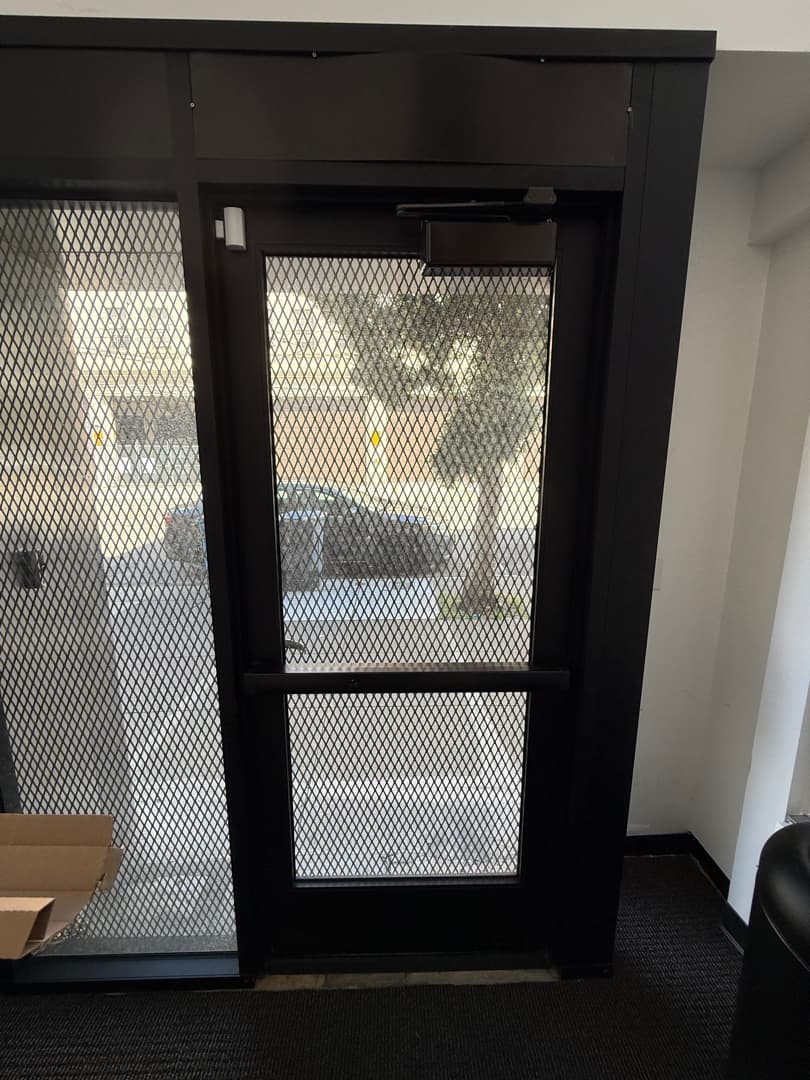
Closer diagnosis starts with how the door actually behaves through a full open-and-close cycle.
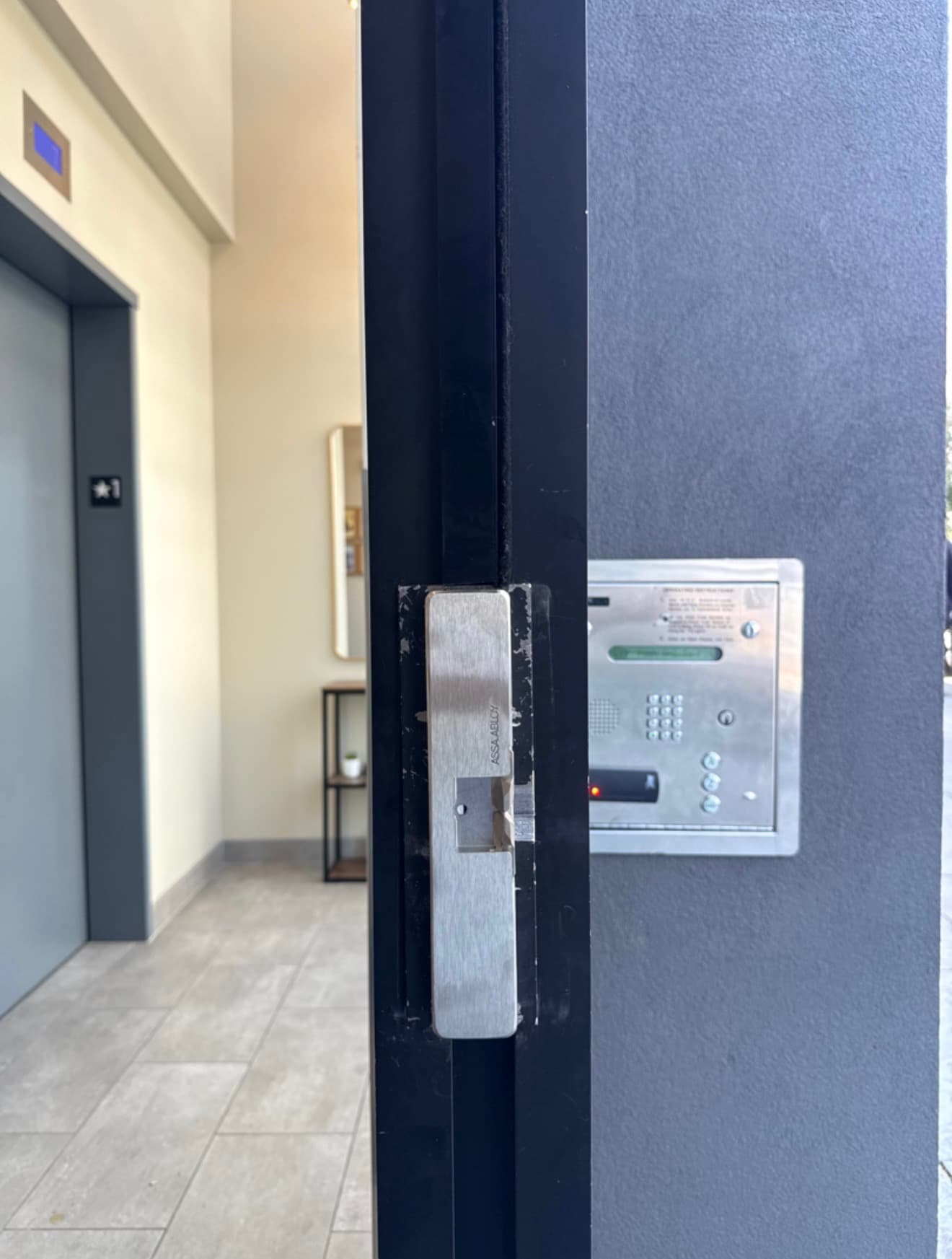
Release hardware on the same opening is checked with the closer and latch, not in isolation.
Usually the closing speed or backcheck needs adjustment, or the closer has failed internally. If hydraulic fluid is leaking down the door, the closer is done and needs replacement. Adjustment fixes most of the rest.
Service request
Tell Elwin what is not working, what systems are already on site, and which access points matter most. The next step is a scope grounded in the building, not a generic product list.
Service