
Key takeaways
- An electrified lock or electrified trim moves the locking mechanism into the door, so power and signal must cross the hinge edge on every opening cycle.
- The three common transfer methods are a concealed EPT, an electrified hinge, and a surface-mounted door loop, each with different concealment, capacity, and service tradeoffs.
- Wire movement, bend radius, edge protection, and pinch points decide long-term reliability more than the lock itself.
- Confirm lever handing, lock function, and voltage and current against the order before hardware is installed on the door.
- Inside egress should be tested independently, because leaving through the door is a mechanical outcome that cannot depend on credentials or power.
- On fire-rated, egress, or accessible openings, approved plans, product listings, manufacturer instructions, adopted code, and the AHJ control the installation.
First distinction
What changes when the lock lives in the door instead of the frame?
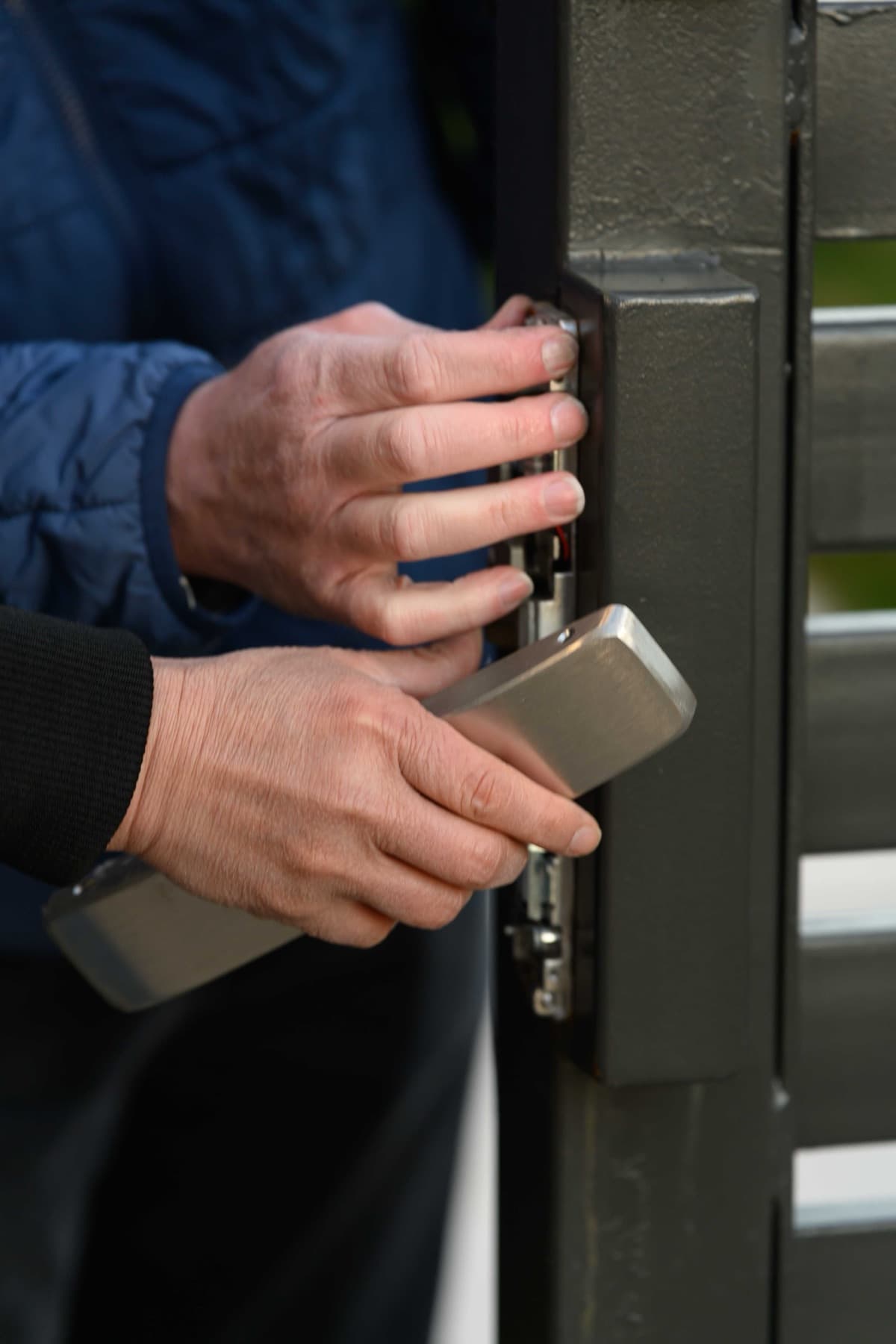
An electric strike keeps the electrical work on the frame: its keeper releases a standard latch, and its wiring never moves. An electrified lockset or electrified exit-device trim reverses that arrangement. The solenoid or motor that locks and unlocks the lever sits inside the lock case or the exterior trim, mounted in the door itself.
That one change reshapes the installation. Low-voltage conductors must now travel from the frame, across the hinge edge, and into a leaf that swings through its full arc thousands of times a year. Every component in that path — the transfer device, the wire routing inside the door, and the connections at both ends — either moves or absorbs movement on every cycle.
The rest of the opening still applies. The door must hang, close, and latch correctly before electrification means anything; a mechanical key override may still be part of the lock; and the hinges, closer, latch, and strike continue to behave as one system. Electrifying the lock adds a power path. It does not remove any mechanical requirement.
Three methods
Which power transfer options carry wires into a swinging door?
Three families of hardware move power and signal from the frame into the door. The right choice depends on the door and frame construction, the number of conductors the lock needs, how visible the hardware may be, and who will service the opening later.
| Method | How it works | Plan around |
|---|---|---|
| Concealed EPT (electrical power transfer) | A flexible protected conduit mortises into the frame on one side and the door edge on the other, hidden when the door is closed | Both the door and frame need preparation; routing must follow the manufacturer template, and rated openings need listed hardware with an authorized preparation path |
| Electrified hinge | Concealed conductors pass through a modified hinge body that replaces one standard hinge in the same location | Follow the exact template; conductor count and gauge are limited, and the hinge must still carry its share of the door's weight |
| Door loop | A surface-mounted flexible armored loop carries the wires over the hinge edge in plain view | Easiest to retrofit, inspect, and service, but visible and exposed; keep the loop clear of the door's swing and of anything that can snag it |
Reliability
Wire movement, bend radius, and pinch points decide reliability.
A stationary wire inside a frame can last as long as the building. A conductor that flexes on every opening cycle lives a different life. The transfer point concentrates all of the door's movement into a few inches of wiring, which is why long-term failures on electrified openings tend to appear there rather than in the lock itself.
Four details protect that point. Bend radius: the conductors must curve, never crease, through the full swing. Moving conductors: wires need room to flex without rubbing on fasteners or bare metal. Edge protection: wherever a wire passes through the door or frame, the opening should be bushed or otherwise protected. Service access: the transfer should be reachable for inspection without dismantling the door.
Before ordering
How do you verify handing, function, and voltage before installation?
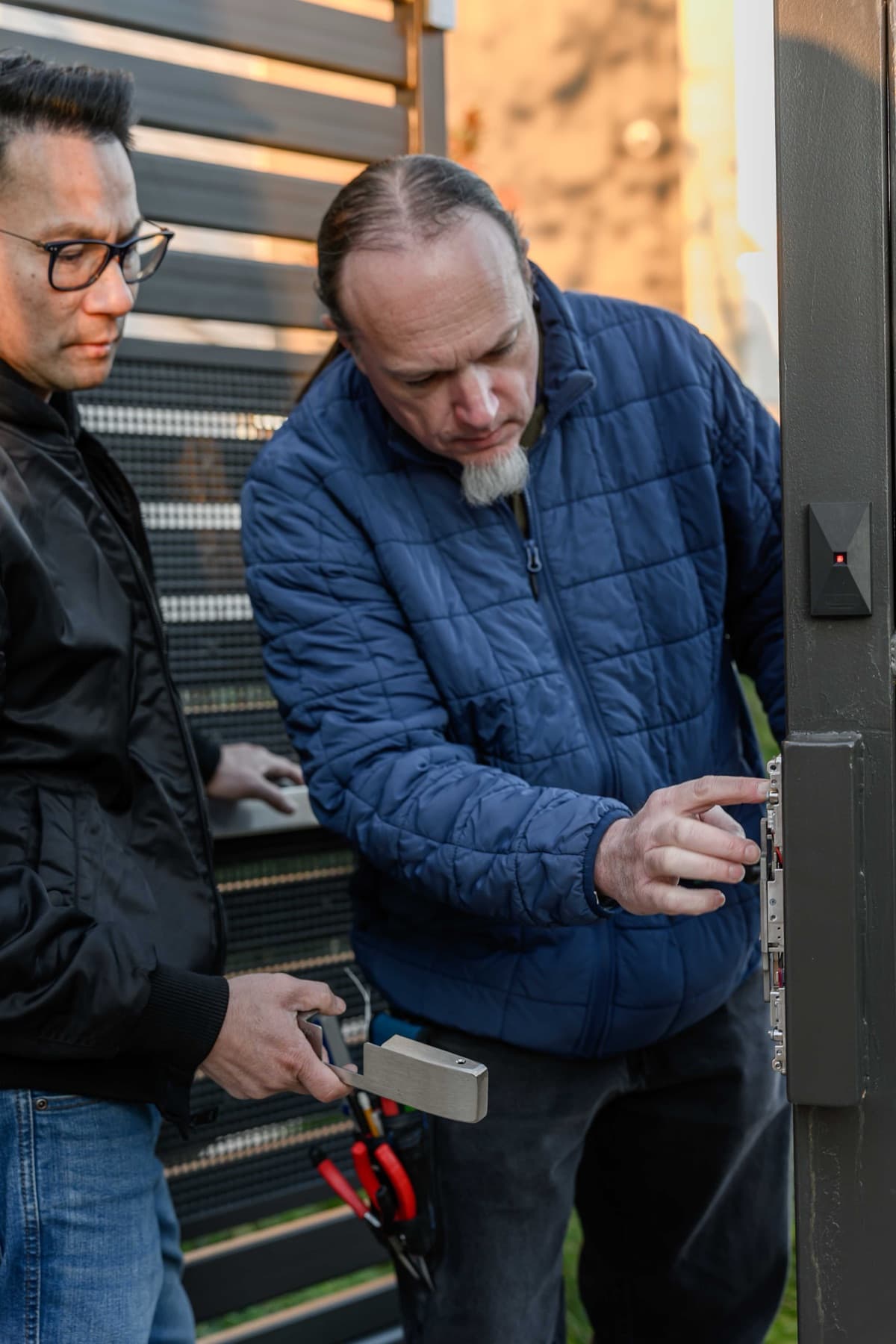
Electrified locks are unforgiving of ordering errors because the door is often cut and wired before a mismatch appears. Expect a qualified installer to confirm four things against the work order before final assembly.
Handing
Levers, trim, and many electrified locks are built for a specific door handing. A wrong-handed unit may not mount, may operate backward, or may hold the latch incorrectly. Handing is confirmed from the opening itself, not from memory or a floor plan.
Lock function
Electrified function describes what the lock does on command and what each side of the door does at rest. Confirm the specified function, then verify it after installation by operating both sides and testing any mechanical key override.
Voltage and current
The lock, the power supply, and the wire run must agree on voltage and available current; most electrified locks operate at 12 or 24 volts DC. Undersized conductors on a long run can drop voltage enough to cause intermittent operation that looks like a defective lock.
Transfer routing
Decide where power crosses the hinge edge and how conductors route inside the door before anything is cut. Routing follows the manufacturer template and the approved preparation for that door, not an improvised path at the opening.
Life safety
Test inside egress independently of the electronics.
On most commercial openings, leaving the room or the building is a mechanical act: turn the lever or push the exit hardware, and the door opens. An electrified lock controls entry from the secure side; it should not decide whether people can exit.
That is why egress is tested on its own. With the system at rest, with a valid credential presented, and with power removed, the inside lever or exit hardware should release the door the same way every time. If egress behavior changes with power state or credential state, the opening should come out of service until it is reviewed.
Fire-rated, required-egress, and accessible openings carry additional requirements. Approved plans, product listings, manufacturer instructions, adopted code, and the authority having jurisdiction (AHJ) control what may be installed and how it must behave. A general guide cannot substitute for that review, and an undocumented release sequence is a reason to stop, not to improvise.
Owner checklist
What should a property team confirm before approving electrified-lock work?
A proposal for electrified hardware is complete when it answers the questions below. Anything left open here tends to resurface as a change order or a reliability problem.
- The scope names the lock or trim model, handing, function, finish, voltage, and the power transfer method — not just an electrified lock.
- The door and frame can accept the preparation, and rated openings have listed hardware with an authorized preparation path.
- The transfer method suits the setting: a concealed EPT or electrified hinge where appearance and tamper resistance matter, a door loop where retrofit simplicity and serviceability matter.
- Wire protection is explicit: bend radius, edge protection at metal pass-throughs, and clearance from pinch points through the full swing.
- The test plan covers mechanical closing and latching, locking and unlocking on command, the mechanical key override, and inside egress with power on and with power removed.
- Photos of the full opening, the door edge, the frame, and any labels are captured before cutting begins.
Common questions
Questions about electrified locks and power transfer
What is an EPT on a commercial door?
An EPT, or electrical power transfer, is a concealed flexible conduit that carries low-voltage wiring from the frame into the door. One end mortises into the frame and the other into the door edge near the hinge side, so the conductors stay protected and hidden when the door is closed. It is a common choice where appearance and tamper resistance matter.
Is an electrified hinge better than a door loop?
They solve the same problem with different tradeoffs. An electrified hinge is concealed and replaces a standard hinge in place, but it carries a limited number of conductors and must follow its template exactly. A door loop is visible and surface-mounted, which makes it the easiest option to retrofit, inspect, and service. The door, the wiring the lock needs, and the setting usually decide.
Why does an electrified lock work only while the door is open?
That pattern usually points at the power path, not the lock. If the lock operates with the door open but fails when closed or mid-swing, suspect the transfer point: a creased or pinched conductor, a broken strand that separates as the wires flex, or a connection that pulls under movement. The transfer and routing should be inspected before the lock is replaced.
Do electrified locks still use a mechanical key?
Many do. A mechanical key override can be part of the specified lock, and it should be tested during installation and after any service, including confirming who holds those keys under the property's key control. Whether an override is included depends on the model and function ordered, so confirm it on the work order rather than assuming.
Does electrifying a lock change how people exit?
It should not. On a typical electrified lockset or trim, the inside lever or exit hardware releases the door mechanically regardless of power or credential state. Egress behavior is verified independently during testing, and any opening where exiting depends on the electronics needs review under the adopted code and the authority having jurisdiction before it stays in service.
Sources and further reading
These sources back up the general guidance. Your building and the people who approve the work decide the details for your doors.