
Key takeaways
- Select an electric strike by matching lock, latch, frame, and listing in that order; brand and price come after.
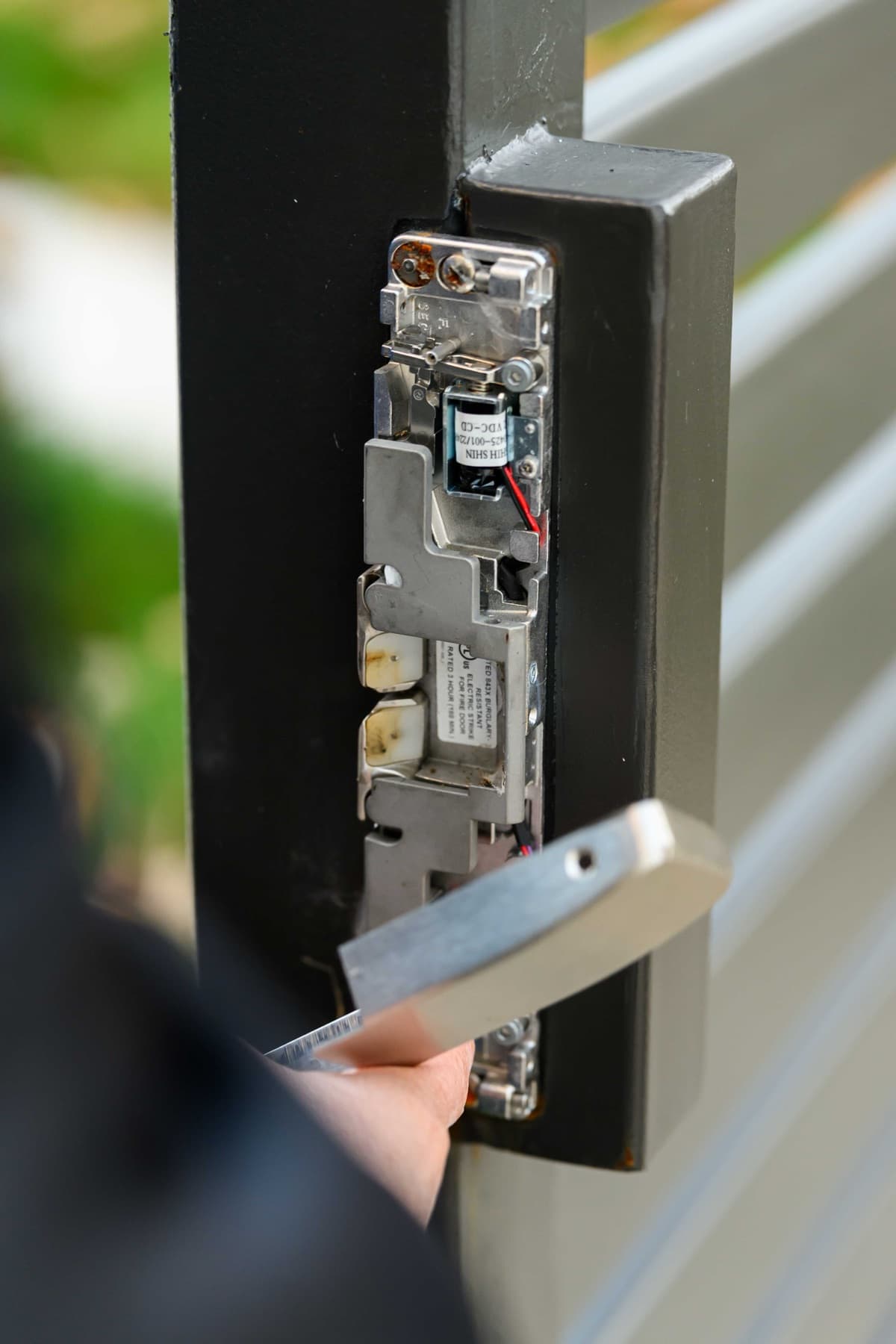
- An electric strike replaces the strike plate and releases its keeper on command; the latch it must receive stays in the door.
- Measure latch or bolt projection, door gap, jamb depth, and reveal before comparing any product series.
- Voltage, current, duty rating, fail state, and monitoring must match the access control system that will drive the strike.
- Preload and misalignment cause most release failures, so correct the mechanical condition before questioning the electrical work.
- Accept the installation only after the door latches with power off, releases cleanly on command, and preserves free egress.
The component
The strike releases the keeper; the latch stays in the door.
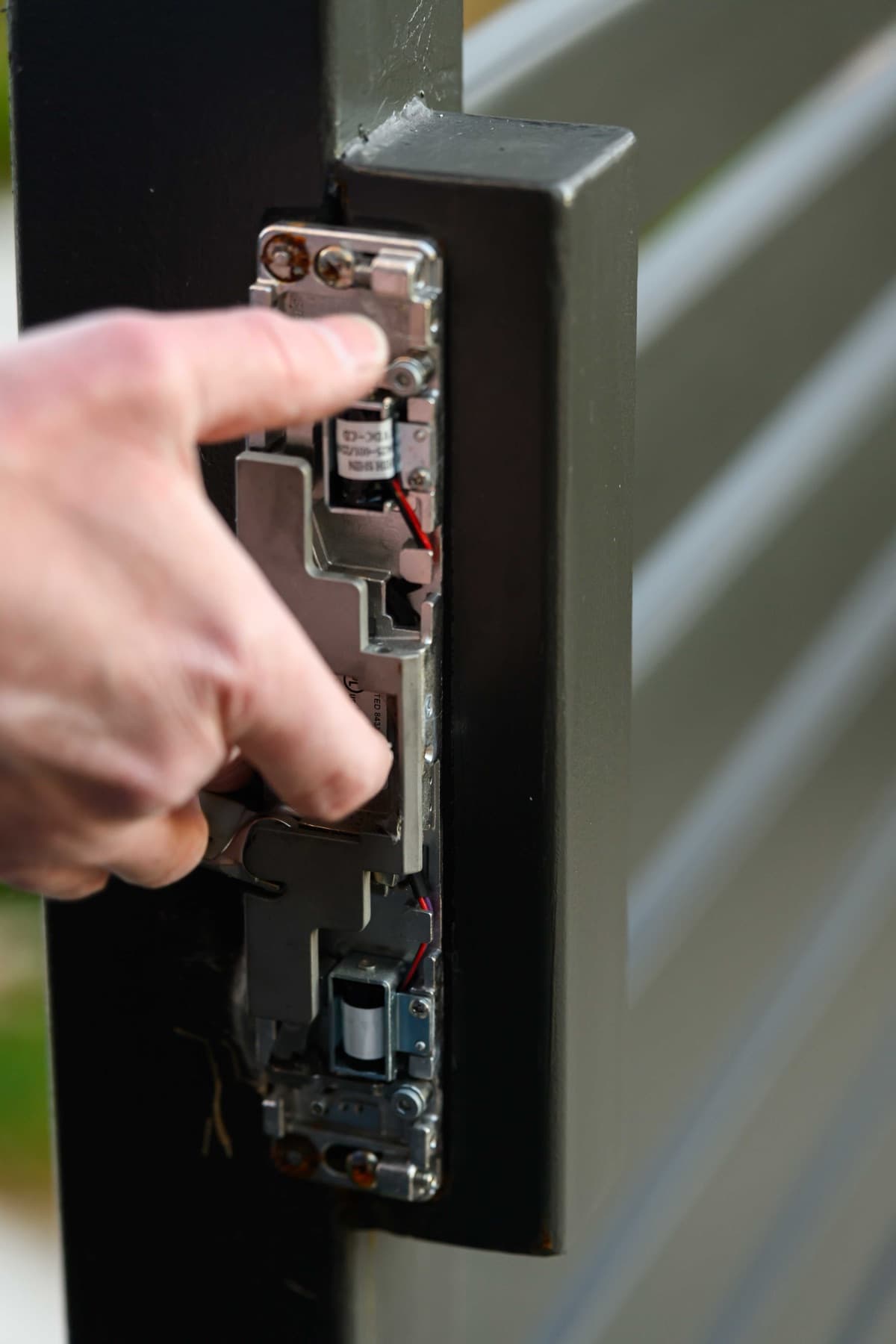
An electric strike is frame-mounted locking hardware. It replaces the standard strike plate at the latch edge of the frame, and its keeper, the jaw that normally holds the latchbolt, pivots free on an electrical command so the door can open without the latch retracting. The latch itself stays in the door, inside the existing lockset or exit device, and continues to work mechanically exactly as before.
That relationship drives every selection decision. Because a strike works by receiving a specific latch or bolt, it succeeds or fails on the geometry of the hardware it faces: the latch type, its projection, whether a deadbolt is present, and the gap between door and frame. A strike chosen by brand or price before the latch is measured is frequently the wrong strike.
It also keeps the opening honest as a system. The door, frame, hinges, latch, closer, and strike behave as one assembly, and electrifying the strike adds power and control logic without removing a single mechanical requirement. A door that does not close and latch reliably today will not be fixed by a release device.
Decision framework
What is the right order for choosing an electric strike?
The reliable workflow moves from the hardware already on the door outward to the code context: lock, then latch, then frame, then listing. Electrical specification comes after all four.
A product series only narrows the family. The exact faceplate, keeper option, voltage, fail mode, monitoring, and finish complete the order, and the manufacturer's current selector guide and installation instructions control the final match.
| Step | What to confirm | Why it comes here |
|---|---|---|
| Lock | Identify the lockset or exit device: manufacturer, series, and function | The strike must be verified as compatible with the specific latch or bolt it will receive, not with the door in general |
| Latch | Measure latch or bolt projection, its centerline height, and the door-to-frame gap | Keeper capacity and faceplate geometry are sized to the latch; an undersized keeper will not hold or release correctly |
| Frame | Record frame material, existing cutout, lip requirement, jamb depth, reveal, and reinforcement | The frame determines which strike bodies and faceplates are physically possible without unauthorized modification |
| Listing | Check fire and smoke labels, the egress role of the door, and required product listings | Rated and egress openings restrict the hardware options before preference or price enters the decision |
First gate
Why does the lock and latch come before the brand?
Different locks present very different hardware at the frame. A cylindrical lockset projects a spring latchbolt, a mortise lock may pair its latch with a deadbolt, and a rim exit device presents its own latch style at the door face. Each of those conditions points to a different strike family, and no amount of installation skill compensates for a keeper that was never designed for the bolt it receives.
Projection is the measurement that eliminates the most candidates. Keeper capacity is published per model, typically in fractions of an inch, and a strike rated for a shorter latch throw will not reliably capture or release a longer one. A deadbolt is a separate, explicit condition: strikes that accept a deadbolt say so, and latch-only strikes cannot be pressed into that role.
This is why the identification step names the manufacturer and series of the existing lock, not just its type. With the lock identified and the latch measured, the manufacturer's selector guide can confirm compatibility in minutes. Without those facts, the order is a guess, and the opening usually pays for it in callbacks.
See all before and after photos
Physical constraints
What does the frame decide?
Frame material
Hollow metal, aluminum storefront, and wood frames call for different strike bodies, faceplates, and fasteners. Identify the material before comparing models; a strike proven on hollow metal is not automatically suited to a narrow aluminum jamb.
Cutout and prep
Measure the existing strike prep and compare it to the candidate strike's template. Never enlarge a frame prep until compatibility, the approved template, reinforcement, and any rating constraints are verified; material removed from a frame cannot be put back.
Lip, jamb depth, and reveal
The strike lip guides the latch across the frame face into the keeper. Jamb depth and the reveal between door and frame determine the lip length that actually fits, which is why both belong in the survey notes.
Reinforcement
A strike carries real door loads every cycle. Expect the installer to fasten into sound frame material or reinforcement, and treat a frame that is cracked, rusted, or previously over-cut as a condition to resolve before hardware is ordered.
Labels and listings
A fire or smoke label makes the opening stop-and-verify territory. Modifications to rated frames are controlled by product listings, manufacturer instructions, adopted code, and the authority having jurisdiction, so confirm the approval path before any cutting is scheduled.
Power and control
Which electrical details have to match the access control system?
Voltage and current
The strike's specified voltage must match what the power supply actually delivers at the device under load, and the supply must carry the strike's current draw alongside everything else on the circuit. Long wire runs drop voltage; the number at the panel is not the number at the frame.
Duty rating
Intermittent-duty strikes energize briefly for each release. If the schedule holds the door released for long periods, the application needs a continuous-duty configuration; holding an intermittent-duty solenoid energized invites overheating and early failure.
Fail state
Fail secure means the keeper stays locked from the outside when power drops; fail safe means it releases. The choice belongs to the application and the code context, and on fire-rated openings the door must remain positively latched, which generally rules out fail-safe strikes. The listing and the authority having jurisdiction control.
Monitoring
Latchbolt and keeper monitoring options report the strike's true state back to the controller. If the property expects door status in its access control software, specify monitoring at ordering time rather than discovering its absence at commissioning.
Failure mode
Preload and misalignment cause most release failures.
Preload is the pressure a latch puts on the keeper when the door is pushed or pulled against it, whether by a person, a closer set too strong, weatherstripping, building air pressure, or plain misalignment. A keeper under load may buzz on command and still refuse to swing free. The strike then gets blamed, and sometimes replaced, while the actual condition is mechanical.
That is why alignment is protected before the prep is touched. The door should close and latch freely, and the latch should center on the keeper without force, before any electrical work is judged. If preload is a known condition of the opening, some strike models are specifically built to release under it, but that is a specification decision made deliberately, not a workaround discovered after the third failed release.
Expect a qualified installer to correct the mechanical condition first, and to treat a buzzing, sticking release as an alignment symptom until proven otherwise.
Pricing a strike as part of a new access-control install? See access control cost per door for typical installed pricing.
Closeout
How do you prove the installation before accepting it?
A finished electric strike installation is demonstrated, not assumed. Before approving the work, confirm each of these at the door:
- The door closes completely and latches positively with power off, under its normal closer force and seal pressure.
- The keeper releases cleanly on a valid command, without buzzing, hesitation, or a second pull at the door.
- There is no preload or binding at the latch when the door is closed; the latch centers on the keeper without force.
- Free egress is unchanged: the egress side of the door operates exactly as it did before the strike was installed.
- Removing power produces the specified fail state, verified from the secure side and the egress side.
- The installed model, voltage, fail mode, and monitoring match the order and the manufacturer's current installation instructions.
- The opening, its labels, and the finished hardware are photographed for the property record, and any conflict was escalated before modification rather than after.
Common questions
Questions about choosing an electric strike
Can an electric strike be added to any commercial door?
Most swinging doors with a compatible latchbolt can accept one, but the frame decides feasibility. Hollow metal, aluminum storefront, and wood frames each call for specific bodies and faceplates, and fire-rated frames restrict modification entirely. A short survey of the lock, latch projection, frame, and labels answers the question before anything is ordered.
Do electric strikes work with panic hardware and exit devices?
Yes, specific strike families are built to receive exit-device latches, including surface-mounted models for rim devices. Compatibility is verified against the exact device manufacturer and model, not against the category. Egress-side operation must remain unchanged: the device still opens the door freely whether the strike is energized or not.
Should the strike be fail safe or fail secure?
Fail state describes the secure or outside side when power is removed: fail secure stays locked, fail safe releases. Most perimeter and tenant doors specify fail secure so a power loss does not unlock the building, and fire-rated openings must remain positively latched. The approved design, adopted code, and the authority having jurisdiction control the choice.
Why does a new electric strike buzz but not release?
The most common cause is preload: the latch is loaded against the keeper by door pressure, seals, closer force, or misalignment, so the keeper cannot swing free. Relieving pressure on the door during release is the telling test. Correct the alignment first, then verify voltage at the strike under load before replacing hardware.
What should be recorded before ordering an electric strike?
Capture the lock or exit device manufacturer, series, and function; the latch or bolt projection and whether a deadbolt is present; frame material, existing cutout, jamb depth, and reveal; door and frame labels; the environment; and the required voltage, duty, fail state, and monitoring. With those facts, the manufacturer's selector guide confirms the exact model.
Sources and further reading
These sources back up the general guidance. Your building and the people who approve the work decide the details for your doors.