
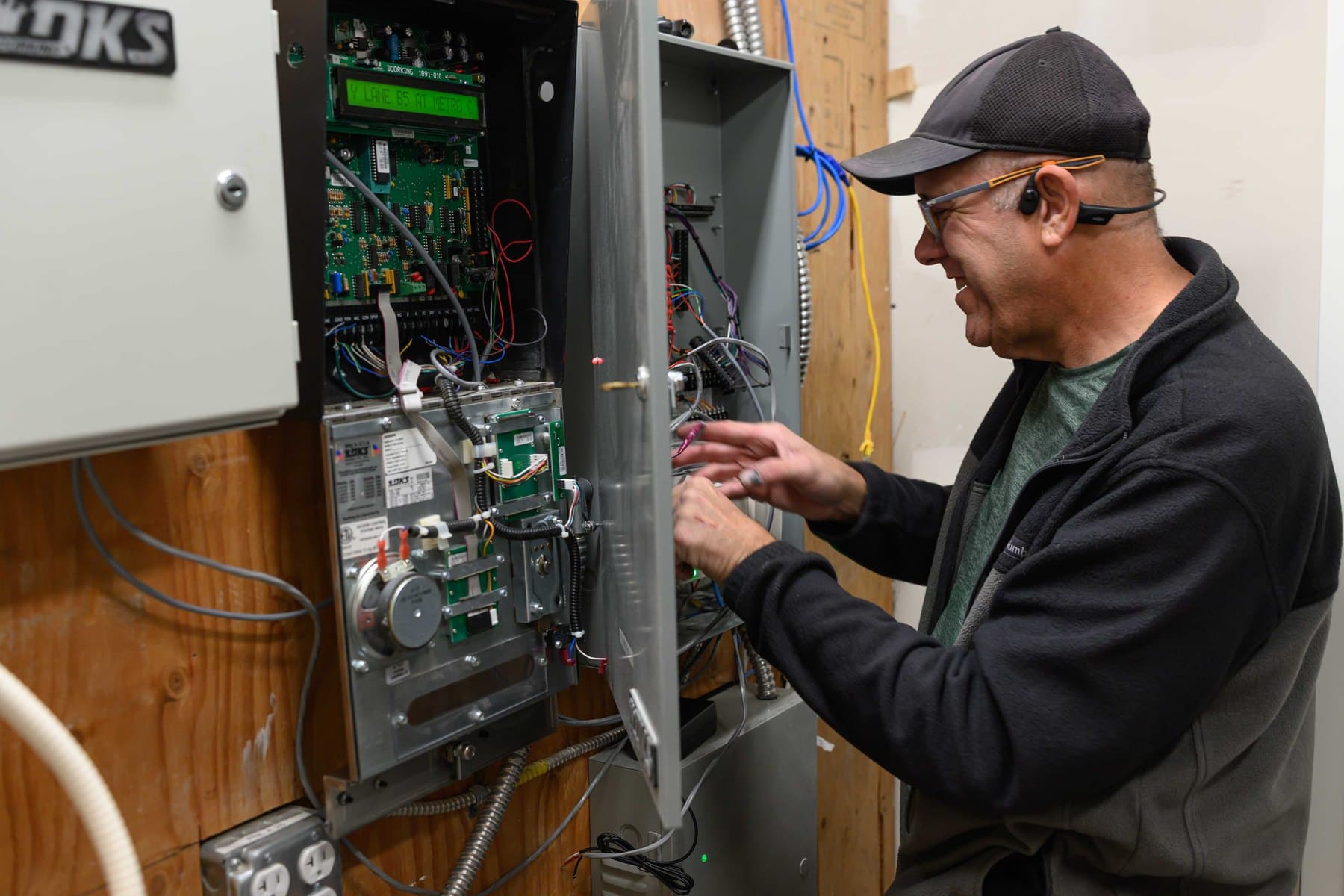
Key takeaways
- Troubleshoot a commercial door in a fixed order: mechanical condition, then electrical supply, then control logic.
- A reported lock problem is often a moving door; verify the door, hinges, latch, strike, and closer before condemning hardware.
- An electric strike that buzzes without releasing is often loaded by door pressure or underpowered at the device, not defective.
- Hardware that works only while the door stands open points to alignment or the wiring path into the moving door.
- Never grind material, bend latch or strike parts, defeat the deadlatch, or leave loose fasteners to cure binding.
- Stop troubleshooting at fire-rated openings, required egress hardware, exposed line voltage, glass, or unclear authorization.
Diagnosis order
Why does mechanical come before electrical and control logic?
A commercial opening behaves as one system: door, frame, hinges, latch, strike, closer, and any electrified hardware shape every cycle together. When the opening misbehaves, diagnose in a fixed order — mechanical condition first, then electrical supply, then control logic — because each layer depends on the one below it.
The order exists because electricity cannot overcome geometry. A controller command cannot release a latch that is bound against its strike, and a healthy voltage reading means little if the door never reaches the frame. Skipping the mechanical layer is how properties end up paying for a new strike, lock, or reader when the actual fault was a sagging hinge.
| Layer | What it covers | What healthy looks like |
|---|---|---|
| 1. Mechanical | Door and frame condition, hinges, latch, strike, and closer | The door swings freely, closes from any position, and latches without extra force |
| 2. Electrical | Voltage, current, polarity, continuity, and power transfer into the door | The device receives its rated power measured at the device, under load, with the door closed |
| 3. Control logic | Credential, schedule, relay output, request-to-exit, door position, and timing | The controller receives the correct inputs and sends the release command when it should |
Mechanical layer
A bad lock is often a moving door.
Before anyone blames the lock, walk the alignment chain from structure to latch. Each link has a simple pass condition, and a failure anywhere upstream shows up as a symptom downstream.
Door
The leaf should hang square and plumb with a consistent reveal — the gap between door and frame — around the perimeter. An uneven reveal is early evidence that the door, hinges, or frame have moved.
Hinges
Hinges should be tight, properly supported by their fastening, and free of visible wear. Loose or worn hinges let the latch edge drop, which changes where the latch meets the strike.
Latch
The latchbolt should project fully and retract smoothly, and the deadlatch — the small secondary plunger beside it — should function so the latch cannot be pushed back once the door is closed.
Strike
The strike should be centered on the latch, securely fastened, and cut to the correct depth so the latch seats without impact or friction.
Closer
The closer should bring the door to a consistent close and latch from any opening angle, without slamming and without needing a push at the end of travel.
Playbook 1
What should you check when a commercial door won't latch?
Start by holding the door nearly closed by hand. If the latch operates freely there but fails when the door completes its swing, the fault lives in the final fraction of an inch — alignment, strike position, or closing force — not inside the lock.
Next, read the reveal and the hinges. An uneven gap around the perimeter, rub marks at the latch corner, or hinge screws that turn by hand all indicate the door has moved relative to the frame. Expect a qualified installer to correct the hanging hardware before touching the strike.
Then confirm the latch is centered on the strike opening and seats to the correct depth. Only after alignment is proven should the closer be evaluated for whether it closes and latches the door consistently from every angle. A closer that is turned up to force a misaligned door shut hides the fault and makes the door harder to open.
If the door swings freely but still slams or fails to latch, explore Elwin's commercial door closer and exit-device service. The closer, latch, and opening are evaluated together before adjustment, repair, or replacement is recommended.
Playbook 2
Why does an electric strike buzz but not release?
A buzzing strike is usually energizing but unable to move its keeper. The most common cause is preload: pressure from the door — wind, a closer holding tension, weatherstripping, or building air pressure — loads the latch against the keeper so it cannot pivot. The first check is to relieve that pressure by gently pressing the door toward the frame while access is granted.
If the strike still fails with preload relieved, the question becomes power. Voltage should be measured at the strike itself while it is operating under load, not at the power supply across the building — long wire runs and shared supplies can leave a device starved even when the panel reads normal. Duty rating and polarity matter too: a strike wired for the wrong duty cycle or reversed polarity can chatter, overheat, or fail silently.
Only after preload and power pass should the release command itself be questioned at the controller. Replacing a buzzing strike without this sequence frequently replaces a healthy part.
Playbook 3
Why does hardware work only while the door stands open?
A lock or strike that releases reliably with the door open but fails when it is closed or moving is giving away the diagnosis. Either the closed position loads the latch against the strike — an alignment and preload condition — or the fault sits in the wiring path that follows the door.
Electrified locks and trim carry power through a door loop, an electric power transfer, or an electrified hinge, and those conductors flex on every cycle. A pinched wire, a fatigued conductor, or a connection that opens as the door swings will produce exactly this pattern: perfect on the bench-side of the motion, dead once the door travels.
Before approving replacement hardware, ask the service provider to state which of the two it found — mechanical loading at the strike, or a failed moving-door connection — and to show the evidence. The two repairs are completely different, and neither one is a controller problem.
Playbook 4
How do you run down an intermittent access failure?
Intermittent failures are solved with records, not guesses. The working sequence is: reproduce the failure if possible, write down the exact event and time, check power and physical connections, then pull the controller's event history for the same timestamps and document what was found.
The timestamp is the hinge of the whole method. When a denied or dead-door event on the floor can be matched to a specific entry in the controller log, the fault splits cleanly: if the controller logged a valid release that the door never performed, the problem is downstream in wiring or hardware; if the controller logged a denial or nothing at all, the problem is upstream in the credential, schedule, reader, or inputs.
Property teams contribute most by capturing the raw material — who was at the door, what credential they used, what they heard, and the exact clock time — and by resisting the urge to power-cycle equipment before the evidence is read.
Do-not list
The shortcuts that turn a service call into a replacement.
Binding doors invite improvisation. These four shortcuts appear on real openings constantly, and each one converts a repairable fault into permanent damage or an unsecured door.
The common thread: every one of these treats the symptom at the point of contact instead of the cause in the alignment chain. Realignment preserves the hardware; material removal and bending spend it.
- Do not grind away door, frame, latch, or strike material to relieve binding. Removed metal cannot be restored, engagement is permanently reduced, and modifications to labeled fire-rated components are limited to what the listing and manufacturer instructions allow.
- Do not bend latch or strike parts to change where they meet. Bent hardware fails unpredictably and masks the alignment fault that caused the interference.
- Do not defeat or disable the deadlatch to make a door close more easily. A defeated deadlatch leaves the opening unsecured while it looks and sounds normally latched.
- Do not leave loose hinges or fasteners after any adjustment. A door that drifts on loose fastening will walk back out of alignment and take the new strike position with it.
Escalation
When should troubleshooting stop and turn into a service call?
Some conditions end in-house diagnosis immediately. On these, the correct move is to stop, secure the area as the property's procedures allow, and bring in qualified service.
These stops are not caution for its own sake. Fire, egress, and accessibility outcomes are governed by approved plans, product listings, manufacturer instructions, and adopted code — and a well-intended field fix can quietly remove a protection the building is required to have.
- Authorization is unclear — no one on site can confirm the work on that opening is approved.
- The opening is fire-rated or carries a label; rated assemblies are controlled by their listings, manufacturer instructions, and the authority having jurisdiction (AHJ).
- Required egress is involved — panic hardware, fire exit hardware, or any door people must exit through cannot be blocked, disabled, or field-modified.
- Line voltage is exposed, or troubleshooting would require opening equipment that carries it.
- Glass is at risk — storefront and glass-door hardware leaves little tolerance, and a slip is expensive and dangerous.
- The scope changes mid-diagnosis — what began as a strike check has become frame, door, or wiring work.
Common questions
Questions about troubleshooting commercial door hardware
Should the electric strike be replaced if the reader accepts the credential but the door stays locked?
Not yet. A valid credential proves the control layer is deciding correctly; it says nothing about the strike. First relieve door pressure and retest, then have voltage measured at the strike under load. Most strikes condemned at this stage turn out to be bound by preload or starved by wiring, and the replacement inherits the same fault.
Can building staff troubleshoot a door before calling for service?
Yes, at the observation level. Staff can operate the door, note exactly where resistance or failure begins, test behavior with the door open versus closed, and photograph the reveal, hinges, latch, and strike. Staff should not open electrical enclosures, adjust rated or egress hardware, or modify any component — those steps belong to qualified service.
What should be written down before anyone replaces hardware?
Record the failure stage (swing, latch, or release), whether it occurs with the door open or only closed, exact dates and times of intermittent events, credential behavior at the reader, any sounds from the strike or lock, and photos of the opening. That record lets a service technician match field events to controller logs and diagnose in one visit.
Why does a door lock work with the door open but fail when it is closed?
Two causes dominate. Closing the door can load the latch against the strike so the release cannot move — an alignment and preload problem. Or the wiring that follows the door through a door loop, power transfer, or electrified hinge is pinched or fatigued and opens as the door travels. Both are diagnosable; neither is fixed by a new controller.
Is it acceptable to file the strike or latch so the door latches more easily?
No. Filing removes engagement permanently and treats a symptom whose cause is elsewhere in the alignment chain, usually the hinges or frame. On labeled fire-rated openings, field modification is limited to what the listing and manufacturer instructions allow. Expect a qualified installer to realign the door and hardware instead of removing material.
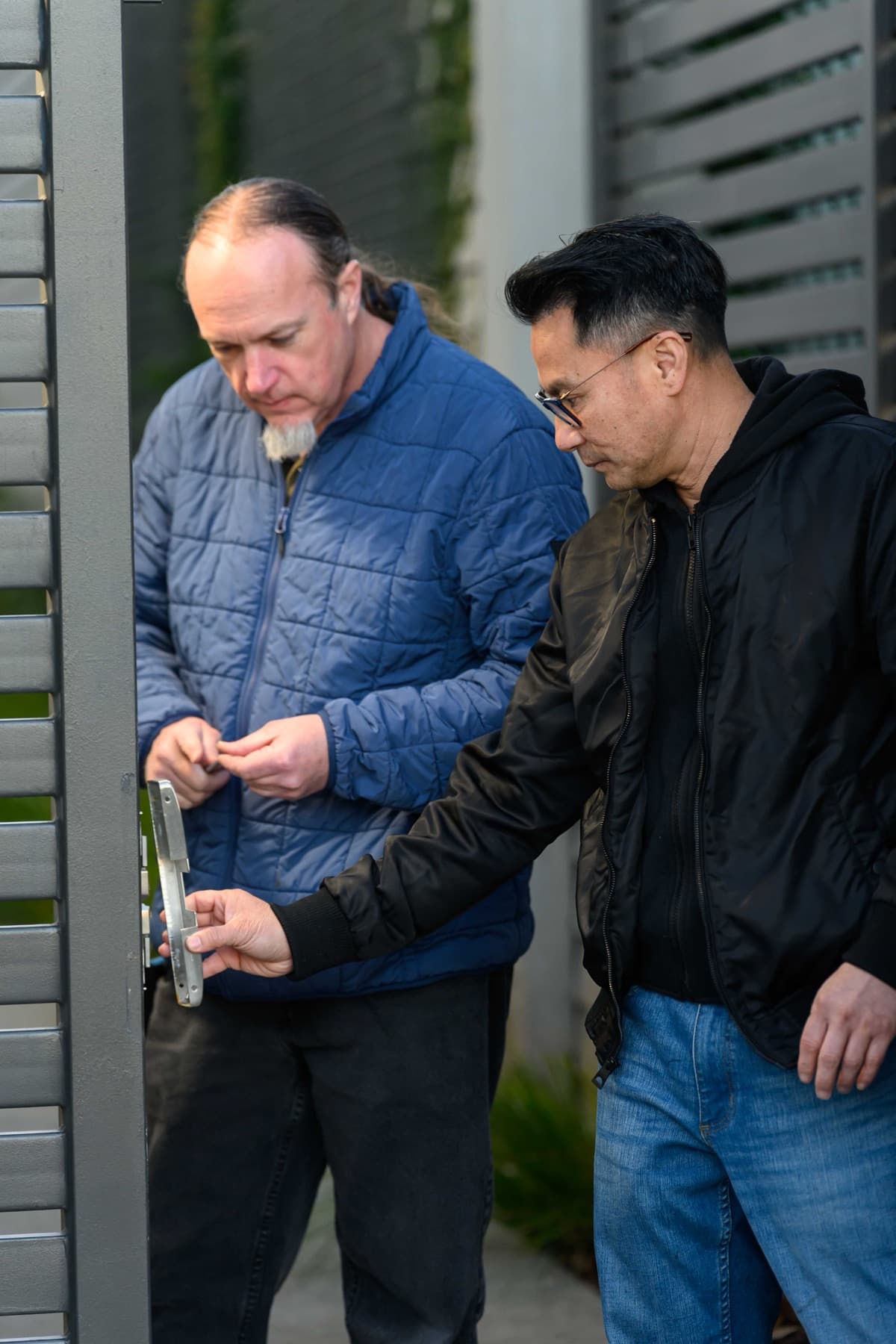
Sources and further reading
These sources back up the general guidance. Your building and the people who approve the work decide the details for your doors.