
Reader or keypad accepts access, but the door stays locked
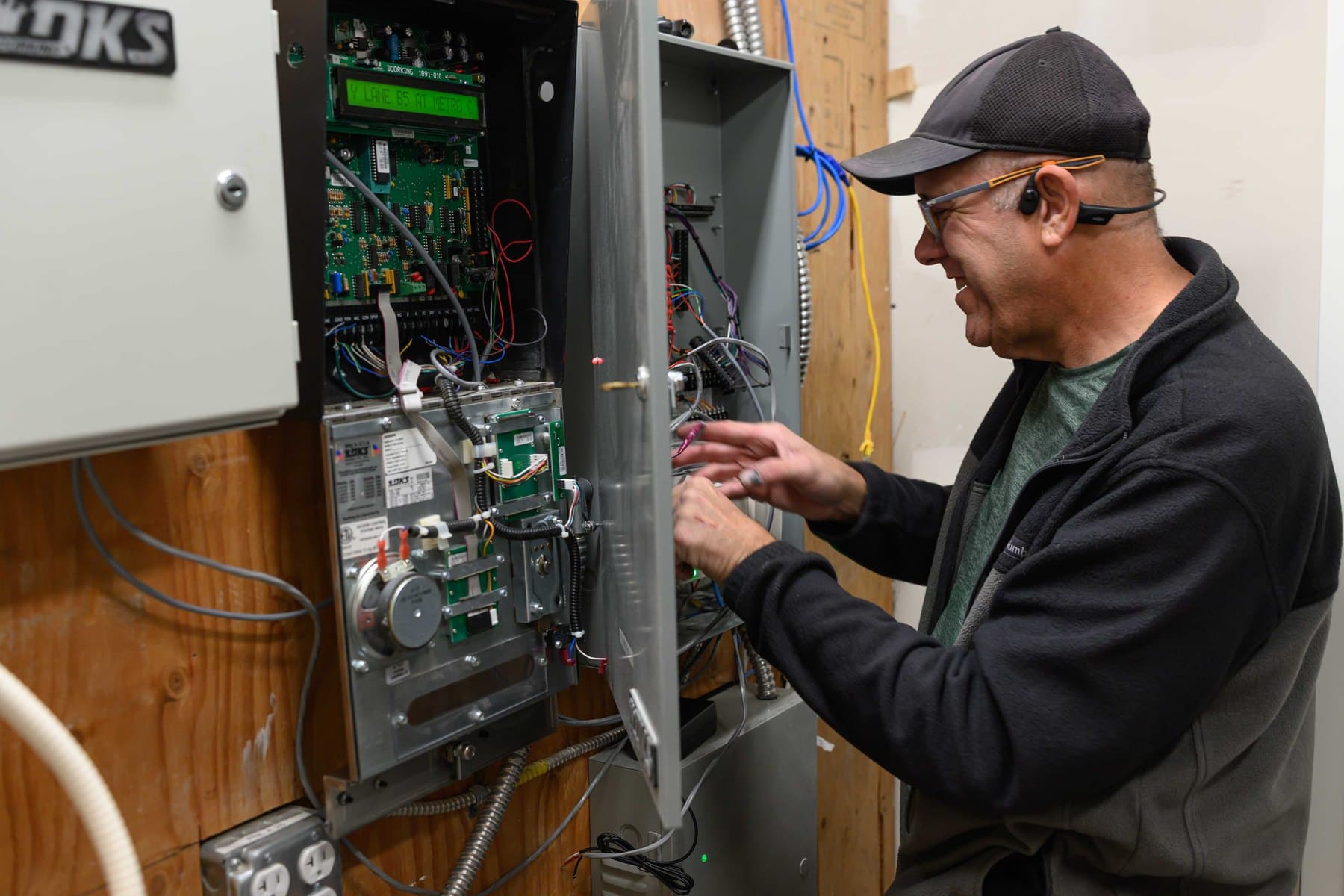
A reader can beep, flash green, or accept a code while the controller, relay, power supply, wiring, electric lock, latch pressure, or door condition still prevents release.
Commercial access repair
Elwin Security diagnoses commercial access-control failures across card readers, credentials, schedules, controllers, electric strikes, maglocks, intercom release, power, wiring, and the physical door.
Elwin confirms the service location, issue, access details, and available dispatch window before the visit.
Common service requests
Plain-language symptoms
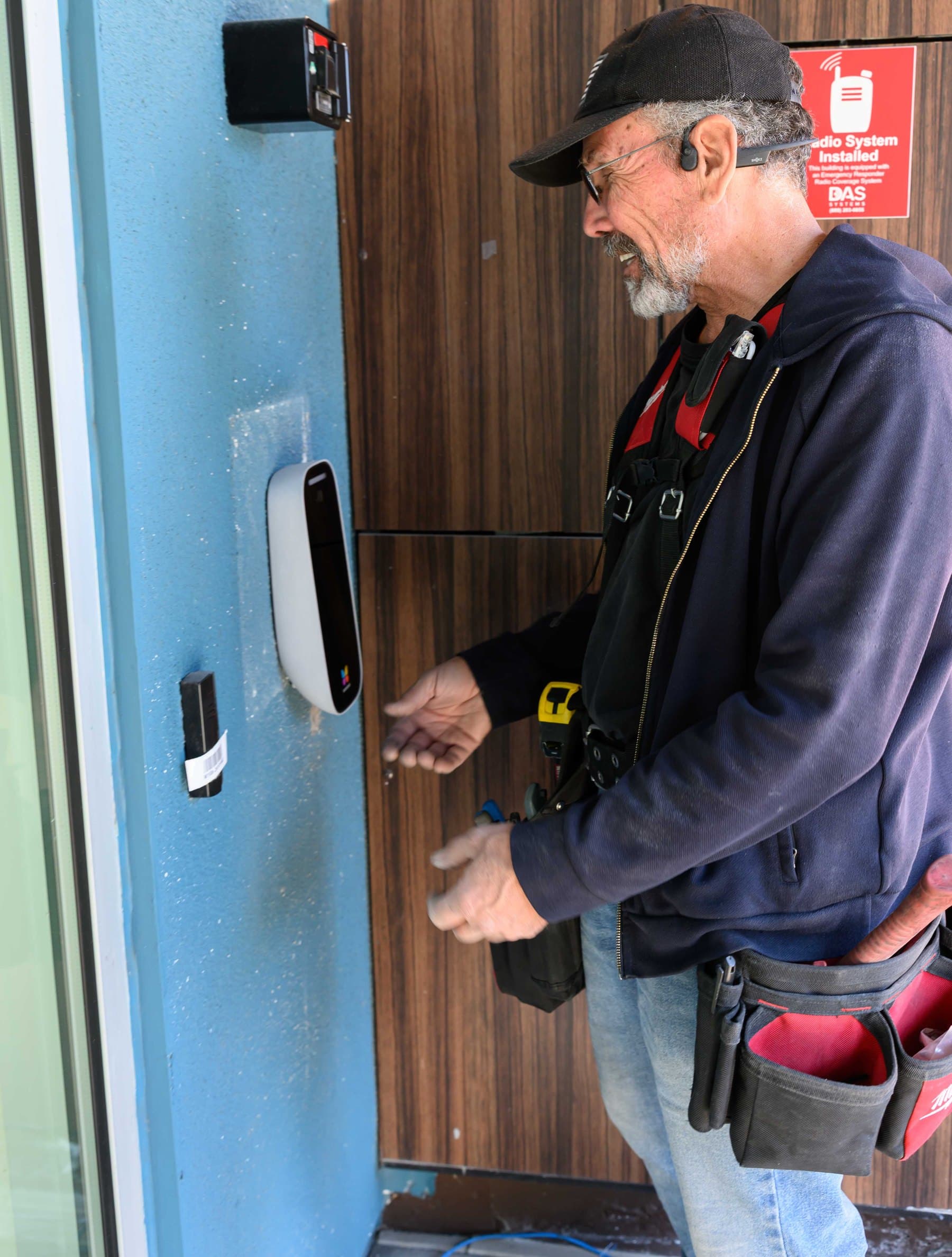
The visible symptom may appear at a reader, keypad, fob, app, intercom, or lock. Elwin traces the complete entry path before recommending repair, cleanup, or replacement.
A reader can beep, flash green, or accept a code while the controller, relay, power supply, wiring, electric lock, latch pressure, or door condition still prevents release.
Elwin checks the credential, user record, schedule, reader, controller, software or app, network context, and whether one user or the full access-controlled door is affected.
The service path checks schedules, controller commands, relays, intercom release, request-to-exit devices, locks, power, wiring, latch behavior, and the physical door or gate.
How service works
The service request identifies the affected opening, users, credentials, system, and physical symptoms first.
Share the service address, affected entry, reader or intercom behavior, impacted users, recent changes, and urgency.
The request has a specific access problem to solve.Elwin reviews on-site access, available administrator context, equipment, and service timing and explains any diagnostic or dispatch terms.
The visit can begin with useful system and site context.Reader, controller, power, wiring, credential, lock, strike, door, and intercom behavior are checked as applicable before scope changes.
The repair follows the cause of the access failure.Who this is for
The service is for managed commercial systems in San Francisco, Oakland, San Jose, Fremont, Milpitas, Santa Clara, Sunnyvale, Hayward, San Mateo, and nearby Bay Area cities—not consumer smart-lock or residential requests.
Teams handling readers, tenant or staff credentials, shared entries, access schedules, and recurring door-release problems.
Commercial properties with controlled doors, service areas, staff entries, or visitor access that is no longer reliable.
Stakeholders coordinating system access, network context, credentials, on-site conditions, and repair authorization.
Connected system context
Elwin plans, installs, configures, and supports access control, intercoms, locks, door hardware, and low-voltage systems for Bay Area commercial properties.
Real Bay Area access-reader, controller, intercom, and door field experience
Troubleshooting across software behavior and physical hardware
Commercial property focus with broader repair and upgrade context when needed
Morgan Hill · San Jose · Milpitas · Santa Clara · Fremont · Palo Alto · San Francisco · Hayward · San Leandro · Oakland · Mountain View · Daly City · Berkeley · Sunnyvale · Los Gatos · Walnut Creek · Richmond · San Ramon
Clear answers before service
The failure may involve the controller, relay, power supply, wiring, electric strike, maglock, request-to-exit, latch, or door condition. Elwin checks the connected path instead of treating it as only a reader issue.
Selected Google reviews
Selected feedback from access-control customers working through legacy systems, platform integrations, wiring, and hardware.
Migrating from a legacy system that's been in place for two decades is never straightforward, but Elwin Security made what could have been a very stressful process feel manageable. The team replaced outdated controllers and power supplies, installed new hardware including latch retraction kits where needed, integrated the new ButterflyMX platform, configured the system, tested every access point, and worked through countless compatibility issues that naturally arise when modernizing an older property.
We’ve worked with Elwin Security across multiple office buildings for both access control and building security improvements. They helped us install and manage systems like Kisi, ButterflyMX, and Brivo, while also assessing the security of our buildings and installing maglocks and other hardware upgrades.
Very efficient and smart people. They charged half of what a competitor asked for a complex wiring job. Elwin is great at finding affordable access control and security solutions.
Request service
Call Elwin or send the service type, city or ZIP, a short description of the problem, and the best way to reach you. Elwin can collect the street address and scheduling details during follow-up. Serving commercial and multifamily properties across the Bay Area.