
Key takeaways
- New install, on a door that has never had access control: $3,000–$7,000 per door.
- Retrofit, on a door that already has access control: $1,500–$3,500 per door, because the wiring and lock usually stay.
- Glass or aluminum storefront doors, new locks or exit devices, and long or hard cable runs push a new install toward the top of its range.
- Software subscriptions depend on the platform and are quoted per job, on their own line.
- Lead time is usually 2–4 weeks, faster with an expedite fee.
How much does access control cost per door?
There are two prices, depending on whether the door already has access control. A new install runs $3,000–$7,000 per door. A retrofit runs $1,500–$3,500 per door. Those are the ranges we quote for commercial doors around San Jose, Santa Clara and the rest of the Bay Area.
For a new install, per door means what it takes to make that door work: the reader, the lock hardware, an exit button or sensor if the door needs one, cable back to the controller, your share of the controller, and the programming and testing. You're paying for a working door, not a box of parts.
Software isn't in either number. Cloud access control runs on a subscription, which depends on the platform, and we quote it per job.
Not sure how many doors you need? Start with which doors need access control.
What's the difference between a new install and a retrofit?
A new install is a door that has never had access control. It needs everything: a reader, an electric strike or other electrified lock, often an exit button or door sensor, and a cable run back to the controller. The lock hardware and the cable run are most of the cost.
A retrofit is a door that already has access control and needs a new reader, a new controller, or a move to a new platform. If the wiring tests good and the electric lock works, they stay, so the job is mostly swapping devices and setting up the new system. That's the kind of job we did at a Mountain View office, switching six doors from old HID readers to Kisi before the office opened.
Adding access control to an existing door that never had it counts as a new install, even though the door isn't new. A retrofit door can also turn into new-install work if the old wiring fails testing or the lock has to be replaced, so we check both before we quote.
What makes one door cost more than another?
The reader is rarely what moves the price. The difference is the door itself: what it's made of, what lock is on it, and how far the cable has to go.
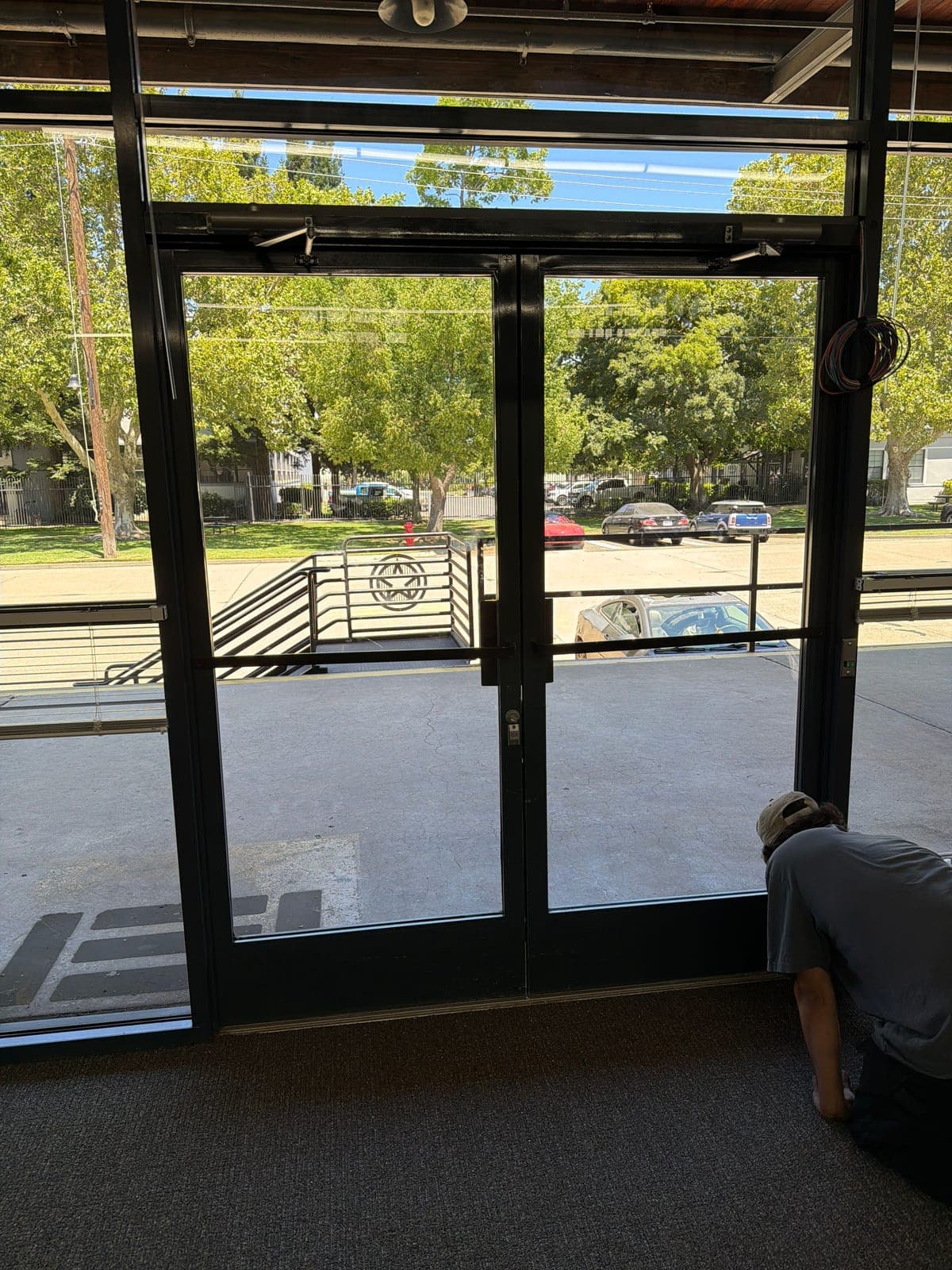
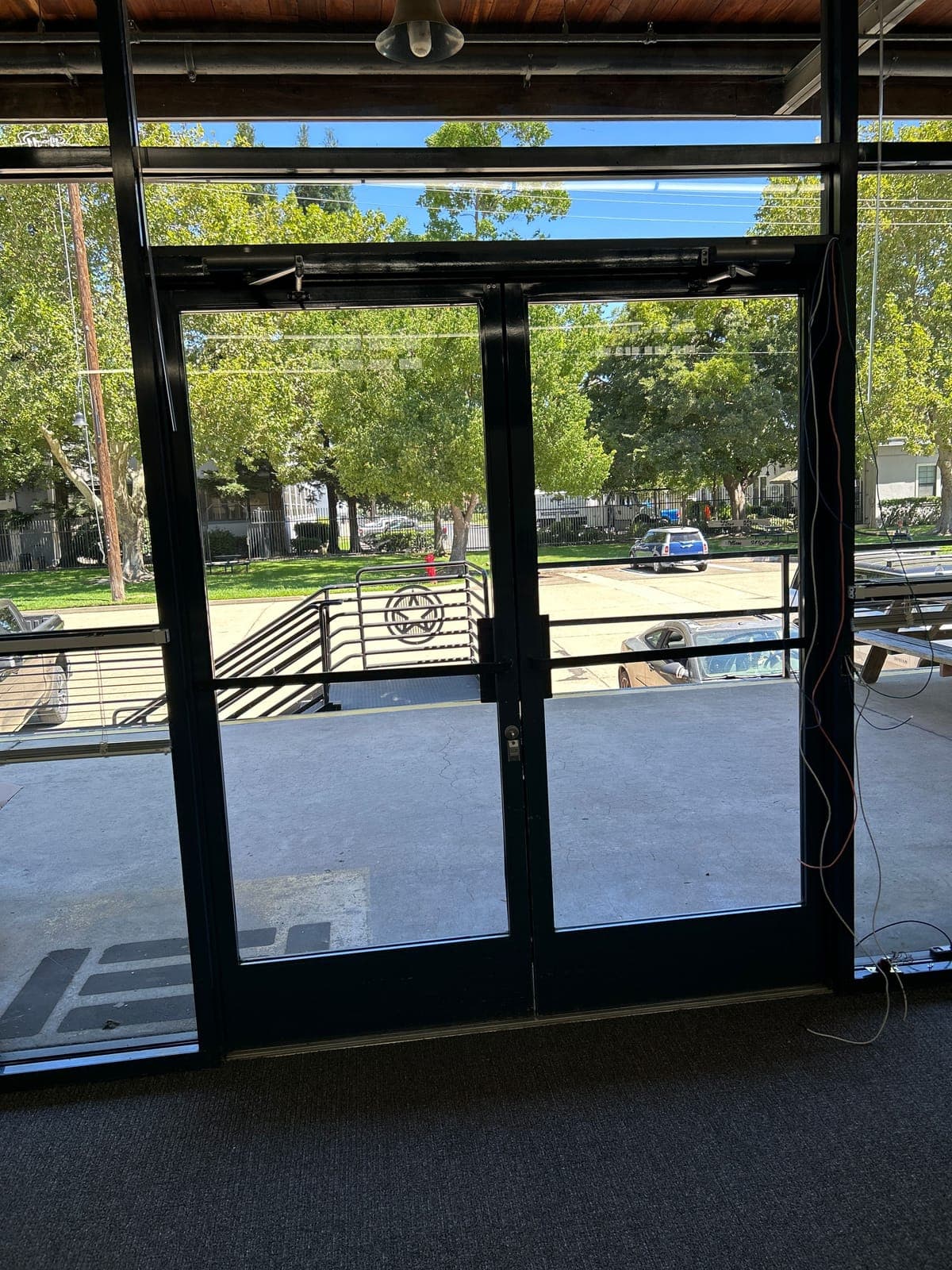
Double glass doors are a common top-of-range door. Two leaves, an aluminum frame and a latch tucked into a narrow stile leave little room for hardware or wire. Many end up with a maglock, a motion sensor and an exit button, or an electrified panic bar.
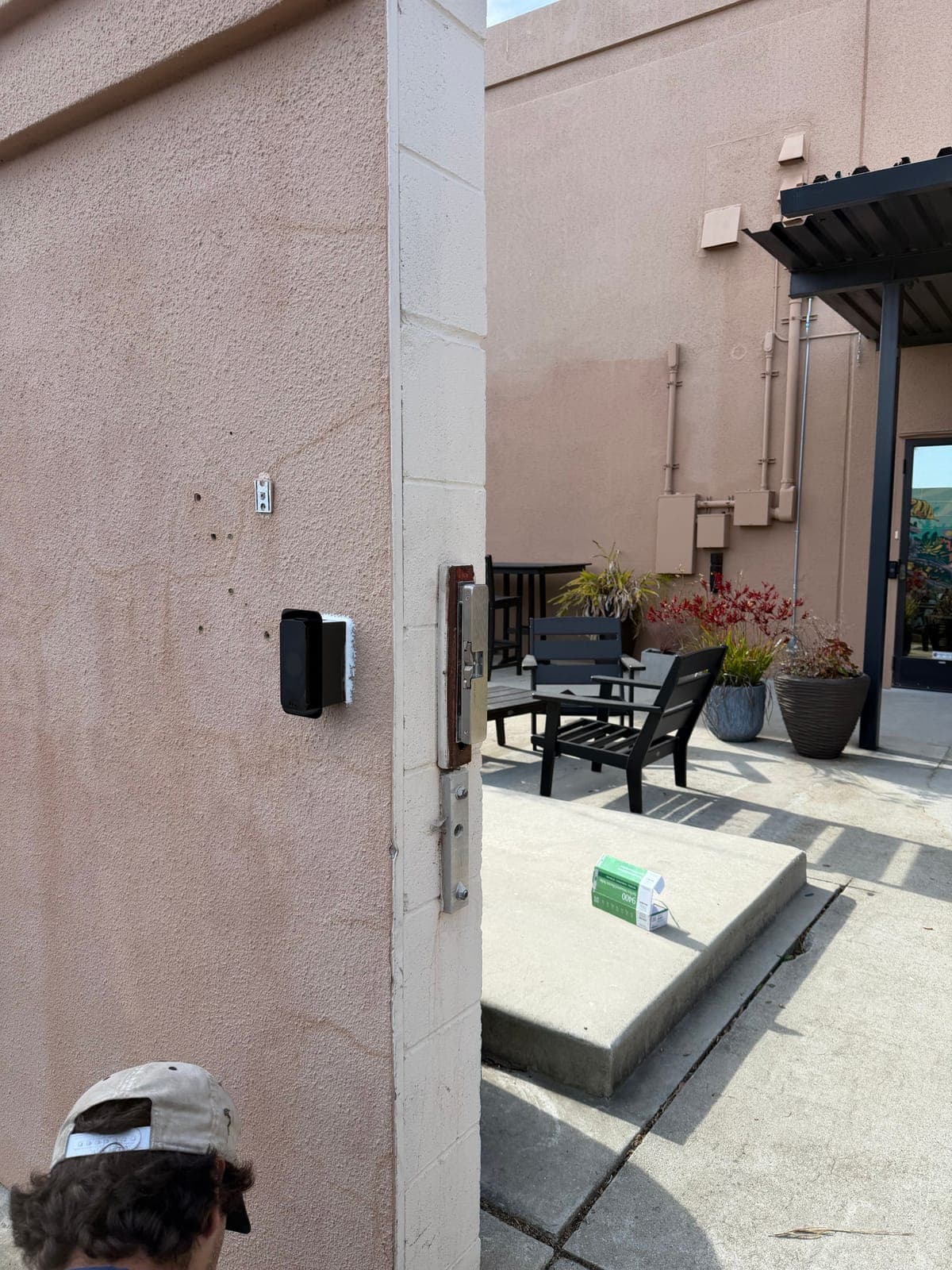
Wood and metal doors with a working lever lock are the easy case. An HES electric strike in the frame usually does it, and the existing lock stays.
For more on glass entries, see keyless entry for commercial glass doors.
| Toward the top | Toward the bottom |
|---|---|
| Glass or aluminum storefront door, with wire run through a narrow frame and storefront-specific lock hardware | Wood or metal door with a standard lever lock |
| New lock, panic bar or electrified exit device needed | Existing lock or panic bar works with an electric strike |
| Long cable run, concrete walls, or hard ceilings with no access | Short run through a drop ceiling to the controller |
| Fire-rated door that needs listed hardware | Interior door with no fire rating |
| Outdoor gate or door that needs weather-ready parts | Indoor door near the IT closet |
Software is quoted per job
Cloud access control lets you add or remove people from an app instead of re-keying. That runs on a subscription. What you pay depends on the platform you pick, so we quote it per job, on its own line next to the install.
Kisi is the platform we install most often. We also work with PDK, Brivo, Verkada, SALTO and Paxton. Their pricing works differently, so compare them on the same doors. Before you sign, ask:
See how we set up Kisi access control for offices and shops.
- Is the subscription billed per door, per site or per user?
- How long is the term, and what happens at renewal?
- Are phone credentials included, or are cards and fobs extra?
- Whose name is the account in? It should be your company's.
- What happens to the doors if the subscription lapses?
Example: what three doors cost
Say your office wants readers on the front glass door, the back door to the parking lot and the IT closet. At $3,000–$7,000 per door for a new install, three doors come to about $9,000–$21,000, plus the software subscription. If those doors already had access control and you were replacing an old system, the same three doors as a retrofit would come to about $4,500–$10,500.
Where you land depends on the doors. The glass front door sits near the top. The back door depends on whether its panic bar works with a strike or has to be swapped. The IT closet, a wood door with a lever lock, sits near the bottom. So this list lands somewhere in the middle.
If you'll want more doors later, say so now. One Kisi controller runs up to four doors, so a fifth door can mean a second controller. Knowing that up front helps your installer place the controller and plan cable.
How long does it take to get access control installed?
Lead time is usually 2–4 weeks from when you approve the quote. If you need it sooner, we can expedite for a fee.
What slows a job down is usually outside the door: waiting on the landlord's OK, getting into the IT closet, or a lock part that has to be ordered. Start the landlord conversation the same day you ask for a quote.
What a good quote should include
Get quotes in writing, and make sure each one covers the same doors and the same work. California's contractor board gives the same advice: compare written bids for the same job, and don't pick the lowest just because it's lowest. A good quote lists:
Comparing installers? Read how to choose an access control installer in the Bay Area. For how power gets to the lock, see electrified locks and power transfer.
- Every door by name, with the hardware for that door: reader, lock or strike, exit button or sensor, door sensor, and a closer if needed.
- What's being reused and what's being replaced.
- Power: whether you need your electrician to add an outlet near the controller.
- The software platform, with the subscription priced on its own line.
- Setup: your user list, schedules, fobs or phone credentials, and training for whoever runs it.
- Testing, including that every door still opens from the inside without a fob.
- What's left out, such as patching and painting, the landlord's systems, or anything your electrician handles.
- Lead time, and the expedite fee if you need it sooner.
Questions about access control cost
How much does it cost to add a card reader to one door?
About $3,000–$7,000 if the door has never had access control. Glass storefront doors, new locks and long cable runs push it up. If the door already has access control and you're replacing the reader, a retrofit runs about $1,500–$3,500.
Is there a monthly fee for access control?
Usually, yes. Cloud platforms like Kisi charge a subscription. The cost depends on the platform, so we quote it per job, on its own line next to the install.
Why does a glass door cost more to put on access control?
Usually because the aluminum frame leaves little room for wire and hardware. Glass doors often need storefront-specific strikes, a maglock with an exit sensor and button, or an electrified panic bar.
How long does an access control install take?
Two to four weeks of lead time is normal, and an expedite fee can shorten it. Landlord approval and special-order lock parts are the usual delays, so start on those early.
Can I reuse my old access control wiring?
Often, yes, if it tests good and runs where the new reader and lock need it. That's what makes a retrofit cheaper: about $1,500–$3,500 per door instead of $3,000–$7,000 for a new install.
Sources and further reading
These references support the general technical guidance. The right answer for a specific opening still depends on the property and the authorities responsible for the project.