
Key takeaways
- Most HOAs only need readers on the pool gate, the clubhouse entry and the gym room. Your unit doors stay on keys.
- A reader and electric lock get added to a pool gate's self-closing, self-latching hardware. They never replace it.
- Every pool gate with a reader still needs a way out without a fob, placed so nobody outside can reach through and press it.
- Write your guest, lost-fob, move-out and past-due rules before install day. The system only enforces what your board decides.
- Name a main and a backup administrator so the system doesn't live on one board member's phone.
Start here
Which HOA doors and gates need key fob readers?
Start with the doors your residents complain about: the pool gate, the clubhouse entry and the gym room. That's where the usual problems live. Non-residents in the pool. A gym anyone can use if they know the code. Keys that walked off years ago and still work.
You don't need a reader on every clubhouse door. A restroom or kitchen inside a locked clubhouse is already behind the front door. Add a reader where the people or the hours change, like a gym room that stays open later.
Vehicle and garage gates are a different job with different hardware. If those are on your list too, see gate access control.
| Door or gate | Who gets in | When | What to watch |
|---|---|---|---|
| Pool gate | Residents and their guests | Posted pool hours | Must still self-close and self-latch. Needs a way out without a fob. |
| Clubhouse entry | Residents, plus whoever booked the room | Clubhouse hours and booked events | Unlock it on a schedule for an event, or send the renter a temporary pass. |
| Gym room | Residents | Often longer hours than the clubhouse | A propped door lets anyone in. Turn on a door-held-open alert. |
| Pool equipment or maintenance room | Pool service, maintenance and the manager | Service days | Never on resident fobs. Chemicals and pumps live here. |
Pool gates
How do you add a key fob reader to a pool gate?
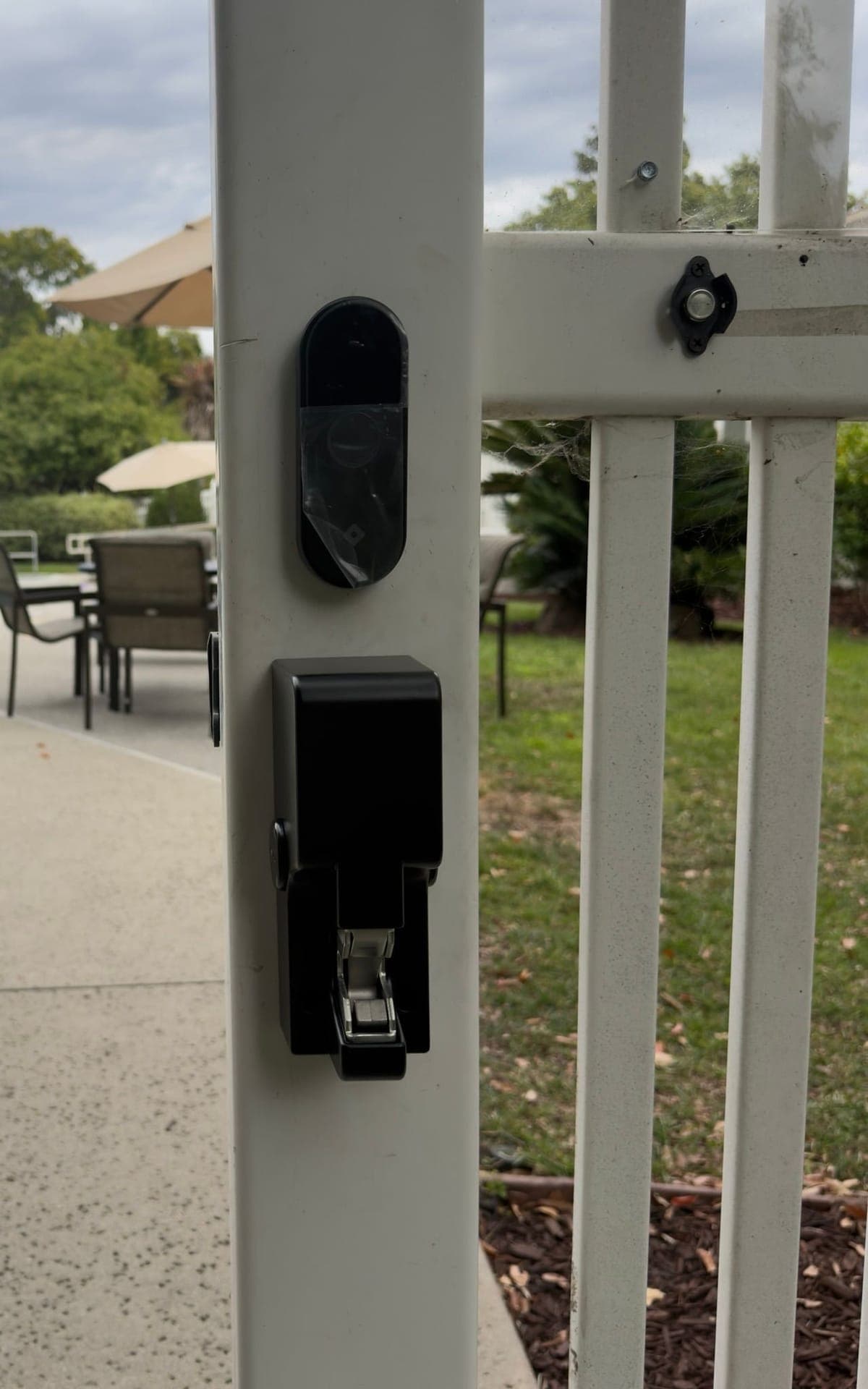
Pool gates are the hardest part of an HOA fob project. The gate already has a job: swing shut behind every swimmer and latch on its own, so a small child can't wander in. A reader and an electric lock can't get in the way of that.
California's public-pool rules generally cover pools at apartments, condos and HOAs too. Those rules (California Building Code section 3119B) call for pool gates that self-close and self-latch, swing outward away from the pool, can be locked when the pool is closed, and give people at least one way out without a key. The CPSC's barrier guidelines for home pools make the same points about closing and latching. Treat this as general information and confirm the details for your pool.
On your gate, four things matter.
Keep the closer and latch working
The closer has to pull the gate all the way shut from fully open, every time, with the new lock on it. If the gate drags or bounces off the latch today, fix that first. A reader won't fix a gate that doesn't close.
Know what happens when power drops
A maglock only holds while it has power. If the power goes out, the gate's own latch keeps it shut, so that latch stays. Other electric locks behave differently, so ask how yours fails before you buy it.
Give people a way out
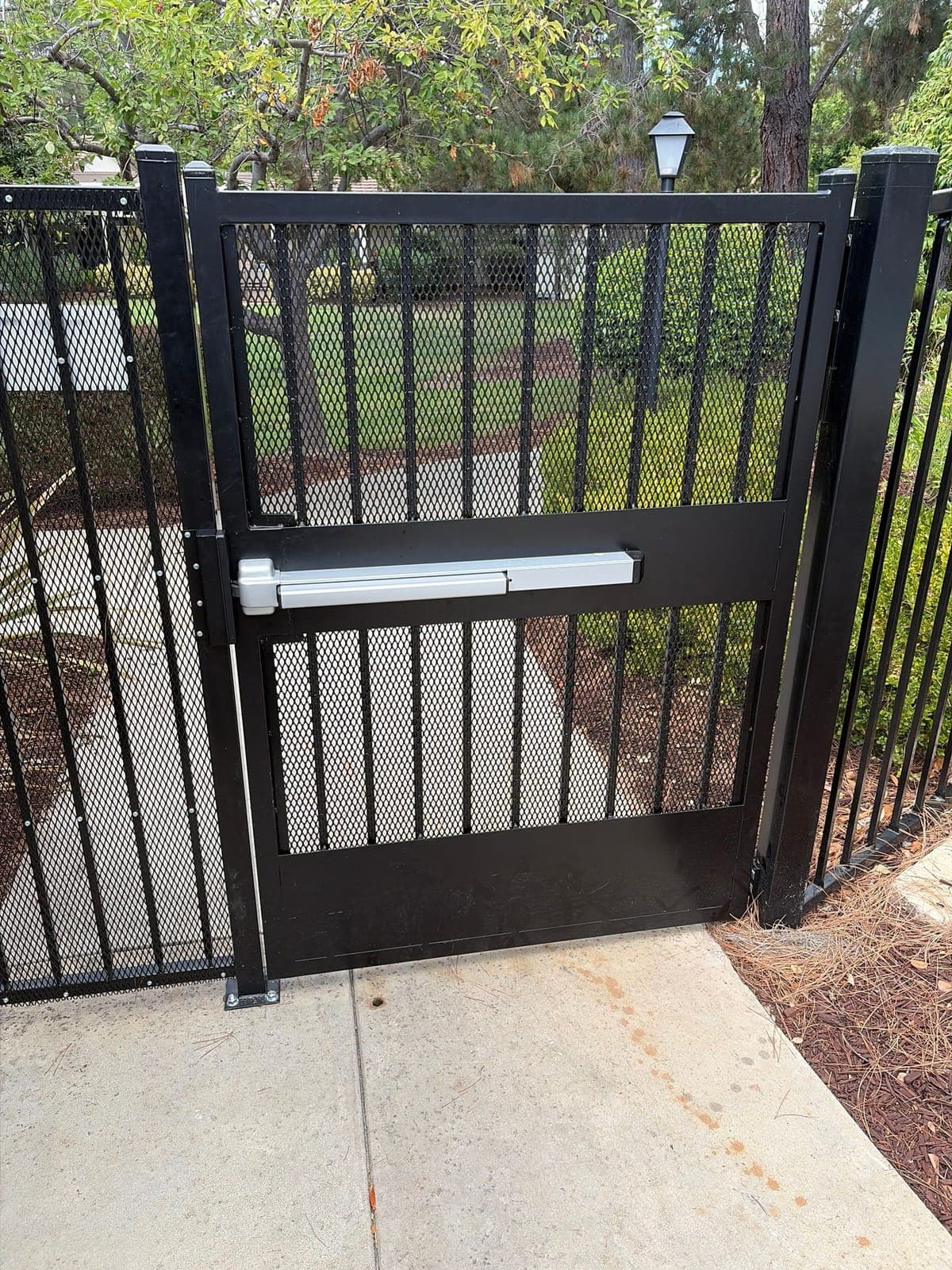
Swimmers leave with a push bar, a lever or a push-to-exit button, never a fob. Mount that hardware where someone outside can't reach through the fence and press it. The CPSC guidelines suggest no gap wider than 1/2 inch within 18 inches of a gate's latch release. Mesh or a solid panel around the exit hardware does the same job.
Plan the cable run
Your pool gate post may sit out on a deck or lawn, far from power and network. Getting cable to it can mean trenching or new conduit, and that can move the price more than the reader does.
Schedules
Set pool hours, guest rules and closures in the system.
The best part of fobs at a pool is that closing time enforces itself. Put your pool hours in the access platform and resident fobs stop opening the gate at closing time, with nobody walking over to lock it. With Kisi, the platform we install most often, a manager changes those hours from a phone or laptop.
Plan for the changes you already make every year: summer and winter hours, holidays, and days the pool is closed for service. One schedule change should lock every resident fob out of the pool while the gym and clubhouse keep working.
Guests are a board decision. The usual options: the guest comes in with a resident who taps their fob, the manager hands out a short-term guest fob, or the platform sends a time-limited pass to the guest's phone. Many platforms, Kisi among them, can do that last one. Decide how many guests a household can bring, and who answers the phone when a guest is stuck at the gate.
For a clubhouse party, you can unlock the door on a schedule or give the renter a pass that starts and ends with the booking. If your booking calendar lives in another app, ask whether it connects to the access platform. If it doesn't, someone copies each booking over by hand.
One warning. Door logs show whose fob opened the gate, not how many people walked in behind them. Don't use them as a headcount for pool capacity, or as proof that a household brought too many guests.
Turning fobs off
Can an HOA turn off a resident's fob for unpaid dues?
Technically, yes. In a cloud system, turning off one fob takes a few seconds and doesn't touch anyone else's. Whether your board should do it is a policy and legal question. Settle it before install day, because the first past-due account is a bad time to decide.
In California, the Davis-Stirling Act generally requires the board to give a member written notice and a chance to be heard before imposing discipline, and your CC&Rs and bylaws decide whether amenity privileges can be suspended at all. We're not lawyers and this isn't legal advice. Ask your association's attorney, then write the policy down.
Keep the home apart from the amenities. If one fob opens a resident's building entry or garage as well as the pool, set up the groups so you can turn off the pool and gym without locking anyone out of their home.
The everyday cases come up far more often:
- Move-outs and sales: turn off the old resident's fobs on move-out day and issue new ones to the new resident. Don't wait for the old fobs to come back.
- Lost fobs: turn the lost fob off right away, then issue a replacement. Many boards charge a fee for it.
- Rentals: decide whether the owner or the tenant holds the amenity fobs while a unit is leased, so a unit doesn't end up with both.
- Staff and vendors: remove access the day a manager, pool service or board member no longer needs it.
- Requests: the manager makes changes from written board decisions. A neighbor's text message isn't a policy.
From the field
What a San Jose community amenity project taught us.
On a large community amenity project in San Jose, a private community club, we electrified the pool and amenity gates with Securitron maglocks, push-to-exit buttons and door closers.
The lesson we carry to every pool job: the lock is the easy part. A maglock can only hold a gate that's fully closed, so a weak closer means a gate that sits open and unlocked. The closer, the latch and the way out decide whether the gate works, and whether your residents call the manager about it.
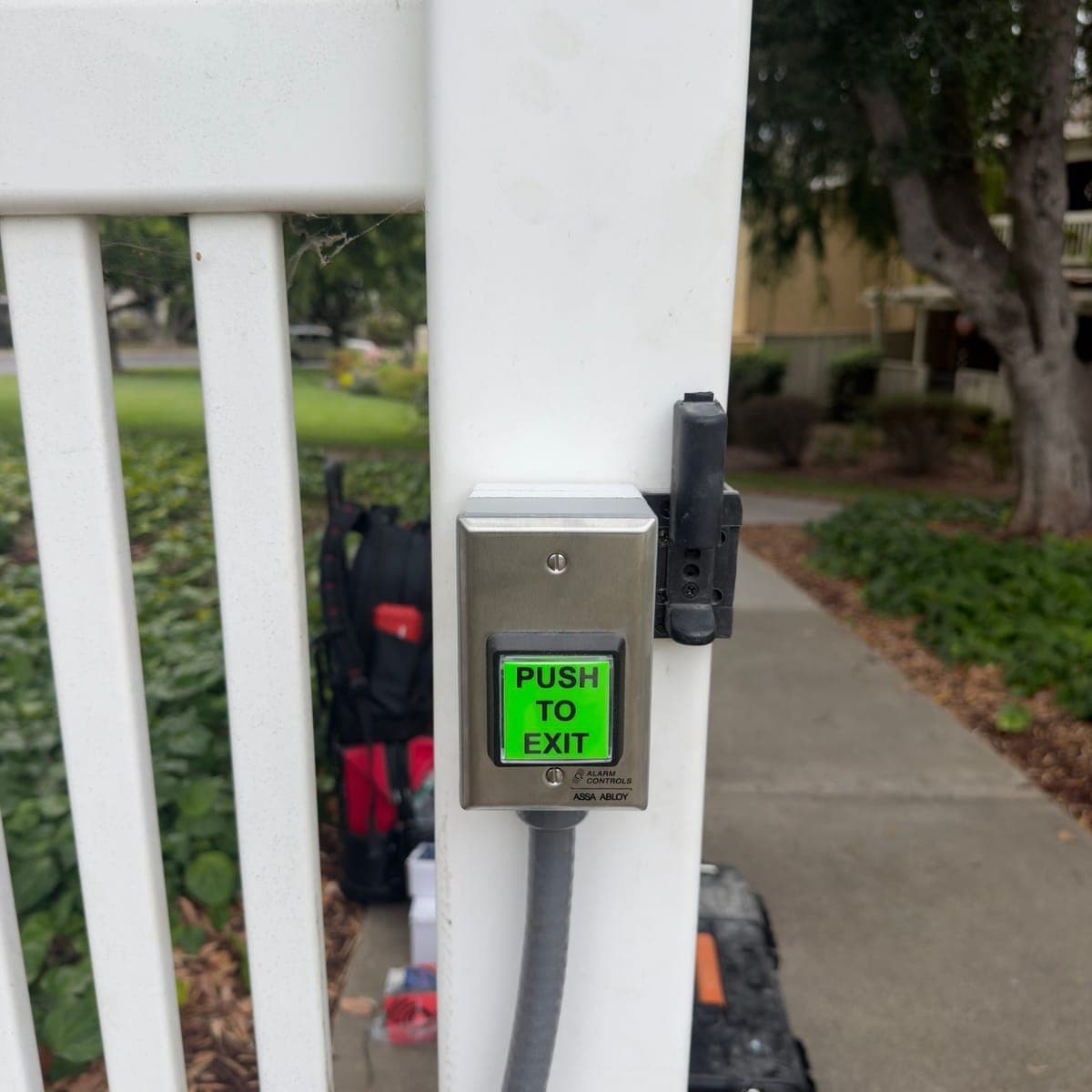
Read maglock release and egress requirements before you choose a maglock for a gate, and fail-safe vs fail-secure locks for what each lock does when power drops. If a gate won't close on its own, start with the closer. Your fire marshal or the authority having jurisdiction (AHJ) decides compliance. Your county's environmental health department may also want to review changes to a pool enclosure, so ask before work starts.
Handoff and budget
Hand the system to the HOA, not one board member's phone.
Your board will turn over, and your management company may change. Put the platform account in the association's name, with your property manager as the main administrator and a board officer as backup. Write down who to call for support and where the fob list lives.
Before handoff, test the rules with real fobs. A resident fob after pool hours, an expired guest pass and a maintenance fob at the gym should all fail. Every gate, opened all the way and let go, should latch. Then have your manager practice adding a resident, turning off a lost fob and changing pool hours.
Budget $3,000–$7,000 per door or gate for a new install, or $1,500–$3,500 to retrofit one that already has access control. A pool gate, clubhouse entry and gym room together come to roughly $9,000–$21,000 as a new install. The platform subscription depends on the platform and is quoted per job. Equipment lead time is usually two to four weeks, faster with an expedite fee. Elwin is based in Santa Clara and works with HOAs and community associations around the Bay Area.
For more on budgets, see how much access control costs per door. For the platform itself, see Kisi access control installation.
HOA questions
HOA pool and amenity fob questions
How much does it cost to put a key fob reader on an HOA pool gate?
About $3,000–$7,000 per door or gate for a new install, or $1,500–$3,500 to retrofit one that already has access control. A gate far from your clubhouse can cost more if cable has to be trenched out to it. The platform subscription depends on the platform and is quoted per job.
Can one fob open the pool, the clubhouse and the gym?
Yes. One fob can open all three, with different hours at each, so your board can keep the gym open later than the pool without issuing a second fob.
Will a fob reader stop our pool gate from self-latching?
No. Installed right, the reader and electric lock are added to the gate's closer and latch, which keep working as before. After the install, open the gate all the way and let go. It should swing shut and latch every time.
How long does an HOA amenity fob install take?
Usually two to four weeks for equipment, faster with an expedite fee. Ask your installer how the pool gate will stay closed and latched while the work is in progress.
Sources and further reading
These references support the general technical guidance. The right answer for a specific opening still depends on the property and the authorities responsible for the project.
- U.S. Consumer Product Safety Commission: Safety Barrier Guidelines for Residential Pools
- County of Santa Cruz Environmental Health: Public Pool and Spa Fencing and Enclosure Requirements (CBC 3119B)
- California Civil Code (Public.Law): California Civil Code section 5855: member discipline notice and hearing