
Key takeaways
- First, find out which glass door you have: a framed aluminum storefront door (metal around the glass) or a frameless all-glass door (glass to the edges).
- Framed storefront doors usually get an electric strike that releases the Adams Rite deadlatch or panic bar, or a panic bar with electric latch retraction.
- Frameless glass doors can't be drilled. They usually get a maglock at the header or a patch lock or bottom-rail lock made for that glass system.
- The reader is the easy part. The lock hardware and the cable path to your IT closet decide most of the work.
- A panic bar means the door is an exit. Keyless entry controls the way in; people inside must always be able to push out.
- Expect about $3,000–$7,000 per door for a new install ($1,500–$3,500 to retrofit a door that already has access control), scheduled two to four weeks out.
Which kind of glass door do you have?
The glass isn't the problem. The frame, or the lack of one, decides what lock hardware will work. Stand at your door and match it to a row below.
Most office and retail entries we see in San Jose and Santa Clara are framed aluminum storefront doors. If you're not sure which you have, a photo of the door edge taken from inside usually settles it.
For a fuller walk-through of door materials and what each one can take, see our commercial door types guide.
| Door type | How to tell | Usual keyless hardware |
|---|---|---|
| Framed aluminum storefront | A metal frame runs around the glass on all four sides. Usually a key cylinder outside and a paddle, lever or push bar inside. | An electric strike in the frame for the Adams Rite deadlatch or panic bar, or a panic bar with electric latch retraction. |
| Frameless all-glass | Glass runs to the edges. Metal patch fittings sit at the corners, or a metal rail runs along the bottom. | A maglock at the header, or a patch lock or bottom-rail lock made for that glass system. |
| Pair of glass doors | Two doors meet in the middle, often with vertical rods that latch at the top and bottom. | A header strike for the vertical-rod panic bars, or electric latch retraction on the bars. |
| Automatic door | A motor box over the door, with a push plate or motion sensor. | The reader ties into the door operator. That is its own design, worked out with the operator in hand. |
Framed storefront doors: strike or latch retraction
On a framed aluminum door, the lock is already in the door. Keyless entry adds a way to release it from the reader. There are three common ways to release yours.
HES makes several strike series for different frames and latches. Our HES electric strike series guide lays them out. For the names of every part on a storefront door (pivots, closers, deadlatches, paddles), see the commercial storefront door hardware guide.
Electric strike for an Adams Rite deadlatch
If your storefront door is like most, it locks with an Adams Rite deadlatch inside the narrow stile, with a key cylinder outside and a paddle or lever inside. An electric strike replaces the plain strike in the frame. When the reader accepts your phone or fob, the strike lets the latch out and the door pulls open. Aluminum storefront frames are shallow, so the strike has to be one made to fit them.
Electric strike for an Adams Rite panic bar
If your door has an Adams Rite rim panic bar, a surface-mounted strike can release the bar's latch from outside. HES's 9800 series, for example, is made for Adams Rite 8700 and 8800 rim panic bars and installs on aluminum frames. The bar keeps working from inside as usual.
Panic bar with electric latch retraction
Von Duprin and other makers sell panic bars with a motor that pulls the latch back on a signal from your access system. Nothing changes in the frame, and the bar can stay unlatched during business hours so customers just pull the door. It needs a power transfer through the hinge side of your door and a power supply sized for the motor.
Frameless glass doors: hardware made for the glass
All-glass doors are tempered glass, and tempered glass can't be drilled or cut once it's made. Try it and the whole door shatters. So nothing gets screwed into your door. Your choices are hardware that clamps or bonds to the glass, or hardware in the header and floor.
- Maglock at the header. A Securitron-style maglock mounts on the header above the door, and its steel plate attaches to the glass with a bracket made for glass doors. It's simple and common. A maglock holds the door with power, though, so the exit side needs its own release, usually a motion sensor plus a push button.
- Patch lock or bottom-rail lock. Some glass-door hardware lines offer electrified patch locks or bottom rails that match their corner fittings. They look cleaner, but they belong to one glass system, so we identify the fittings before quoting.
Can you add keyless entry to a glass door with a panic bar?
Yes. The reader controls the way in, and the panic bar keeps working for the way out. With an electric strike or latch retraction, nobody inside has to touch the reader or know a code to leave. That's why panic bar doors are often the easiest glass doors to add keyless entry to.
Panic hardware means the door is an exit, so people inside must always be able to push out, including when the power is off. Never add a lock, chain or bolt that blocks the bar. Maglocks need extra care here because they need a separate way to release from inside. Your fire marshal or the authority having jurisdiction (AHJ) decides compliance.
One habit to watch: glass front doors get propped open for deliveries. If the door has a door position sensor, Kisi can log a door-held-open event, so you'll know when it happens and how long it stayed open.
What a storefront install looked like in San Leandro
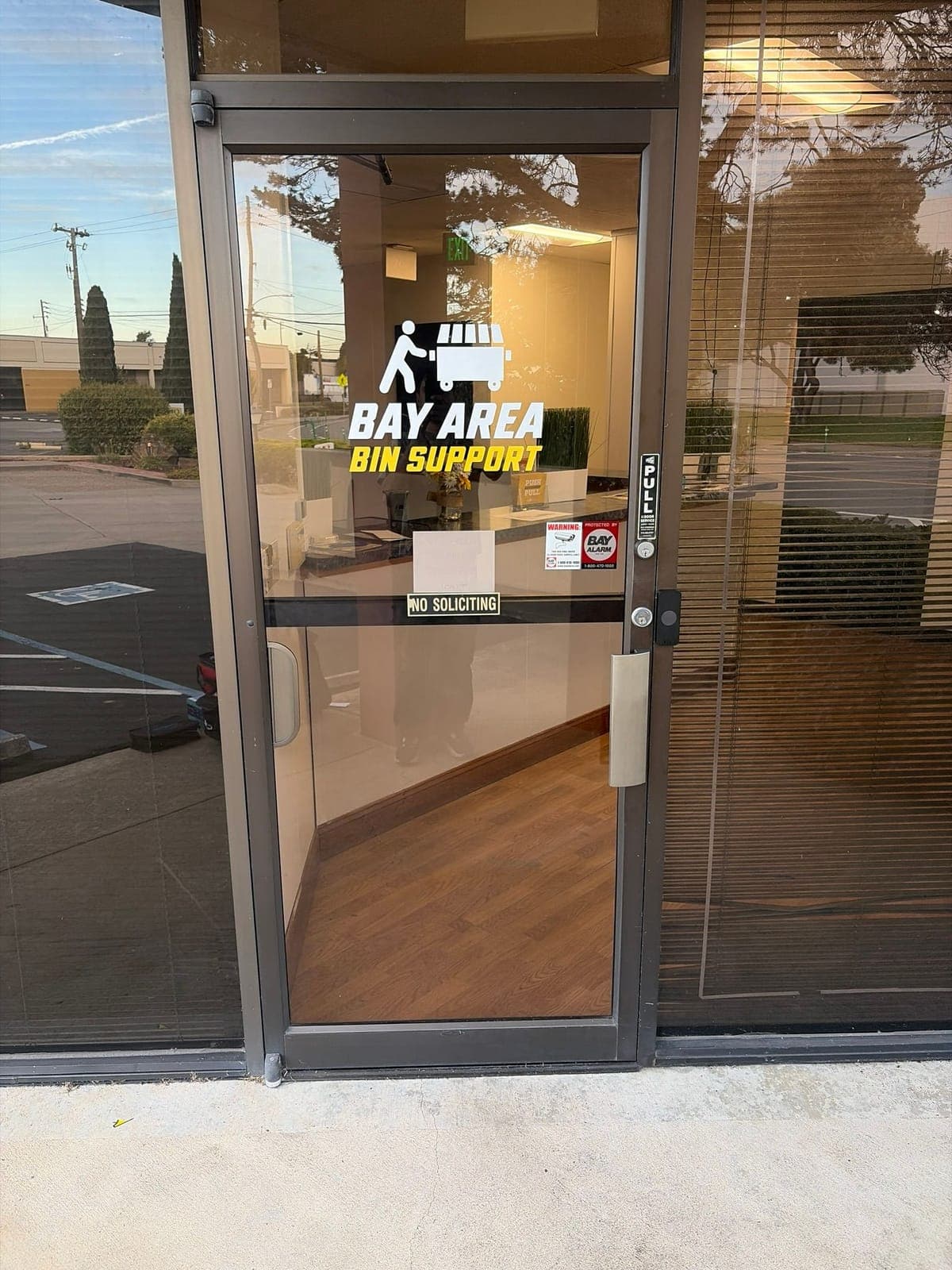
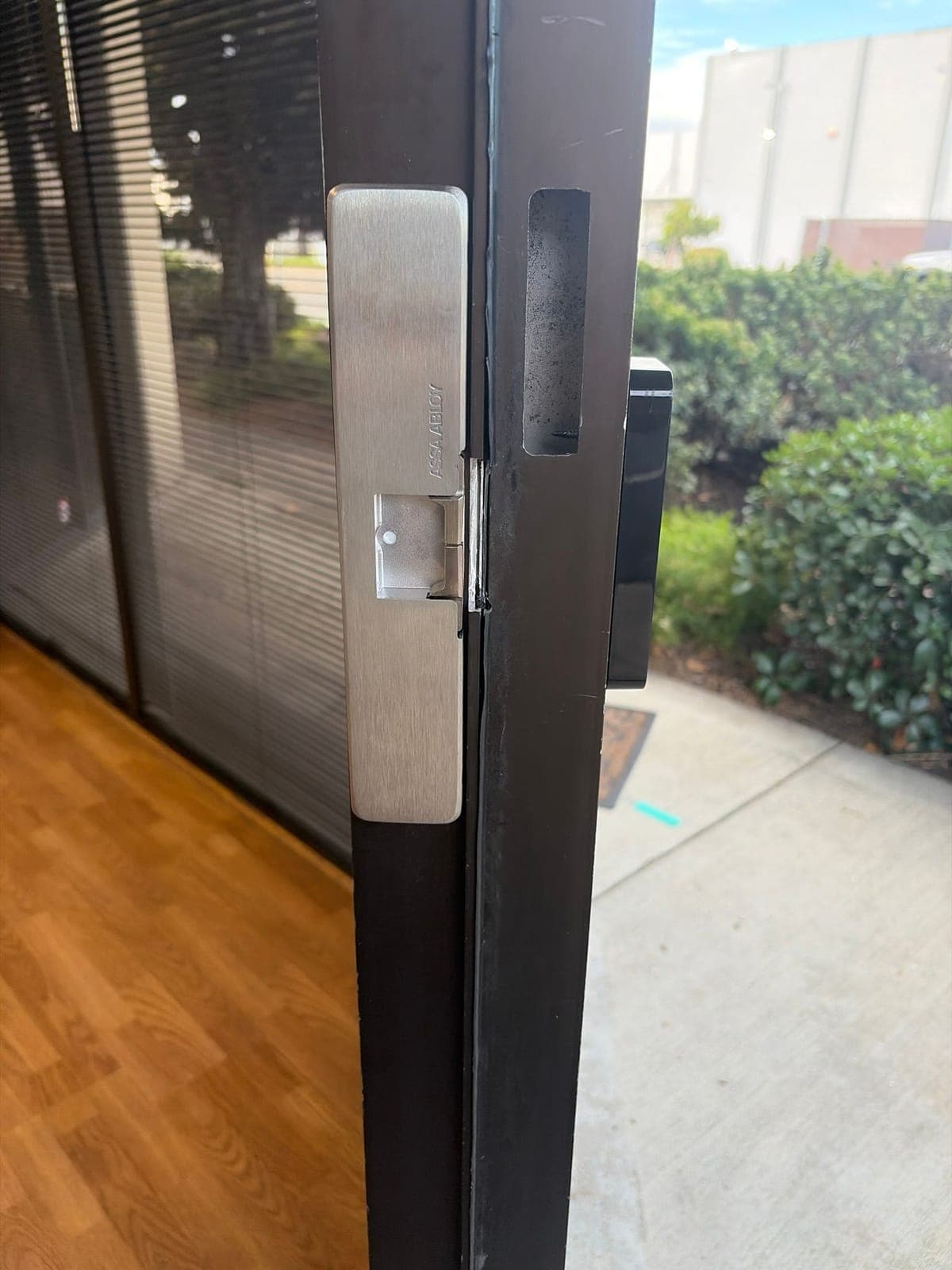
At a San Leandro office, we installed a Kisi reader and controller with an electric strike on the aluminum storefront entry door. The door has an Adams Rite panic bar inside. The reader sits on the frame next to the pull handle, the strike went into the dark aluminum frame where the bar latches, and the controller is inside the suite.
Staff tap a phone or fob, the strike releases, and the door pulls open. From inside, people push the bar and walk out as they always did. The key cylinder is still there as a backup.
The lesson from storefront doors in general: the strike and the latch have to line up closely. If your door sags or a pivot is worn, the latch drags on the strike and the door won't release cleanly. We check that your door closes and latches on its own before the strike goes in.
How much does keyless entry on a glass door cost?
About $3,000–$7,000 per door for a new install, or $1,500–$3,500 per door to retrofit a door that already has access control. The lock hardware and the cable path from your door to your IT closet move the price the most. The software subscription depends on the platform and is quoted with the job. Most installs are scheduled two to four weeks out, faster with an expedite fee.
Kisi is the platform we install most often, and PDK is another option we set up. If visitors need to buzz in, a video intercom can be wired to release the same lock.
See Kisi access control installation or PDK access control installation, and read what goes into the cost per door.
- Send a photo of each side of the door, plus the whole frame and header.
- Send a close-up of the door edge where it latches, and the lock or panic bar inside.
- For frameless doors, send the corner fittings and any brand stamps.
- Tell us where your IT closet or network equipment is, and roughly how far it is from the door.
- Tell us whether the door drags, sticks or fails to latch now.
Glass door keyless entry questions
Can you put a card reader or keypad on a glass door?
Yes. The reader mounts on the metal frame or the wall next to the door. What changes is the lock: an electric strike, a panic bar with latch retraction, or a maglock, depending on the door.
Can you drill a frameless glass door to add a lock?
No. Frameless doors are tempered glass, which can't be drilled or cut after it's made. Keyless hardware for these doors clamps or bonds to the glass, or mounts in the header or floor.
Is an electric strike or a maglock better for a glass storefront door?
Usually an electric strike, when the door is a framed storefront with a deadlatch or panic bar. People leave through the existing hardware as before. A maglock is more common on frameless glass, where there's nowhere to put a strike.
How long does it take to add keyless entry to a glass door?
Two to four weeks is our usual lead time from approval to install, and an expedite fee can shorten it. Frameless glass hardware sometimes has to be ordered for your specific fittings.
Sources and further reading
These references support the general technical guidance. The right answer for a specific opening still depends on the property and the authorities responsible for the project.