Older buildings getting their first readers
Elwin checks door and frame condition, strike prep, closer behavior, and the wiring path before a reader is specified for an older opening.
San Francisco multifamily
Elwin Security installs, configures, repairs, and supports apartment access control and gate entry systems for San Francisco apartment and condominium buildings. The scope covers lobby and side doors, intercom door release, courtyard and garage gates, readers, fobs and mobile credentials, electric strikes and maglocks, and the low-voltage wiring between them. Elwin is Santa Clara-based and serves the San Francisco Bay Area.
Use case
The Census Bureau's ACS 2024 five-year estimates list a Total of 414,602 ±403 for San Francisco city, California. Elwin Security plans apartment access control for San Francisco buildings starting with a site walk.
Elwin checks door and frame condition, strike prep, closer behavior, and the wiring path before a reader is specified for an older opening.
Credential removal and reissue after a move-out is set up with the system, not after it.
Directory behavior, delivery access, and door release are configured together with the lobby door hardware.
Service focus
Your fire marshal or AHJ determines compliance.
Elwin plans the intercom, the entry lock, and the door release as one opening.
Elwin fits gate readers, strikes, and garage door controls around the opening's existing hardware.
Site walk
The walk records each shared opening and the hardware that is already there.
The existing lock, the closer, the strike prep, and the existing intercom.
The key count per unit, who administers credentials after move-outs, and whether a Fire Department lock box holds a main entrance key that will change when the lobby lock does.
Scope details
The site walk is where the scope is matched to the building.
Elwin pairs the entry lock with the intercom door release and the reader, and ButterflyMX-certified technicians install and support ButterflyMX intercoms.
Elwin services gate strikes, maglocks, request-to-exit devices, and garage operators; your fire marshal or AHJ determines compliance.
Process
The sequence runs from the first site walk to the handoff.
Lobby, side, garage, courtyard, roof, and corridor exit doors are recorded with lock type, closer, clearance, existing intercom, and wiring path, and any fire-rated or egress door is flagged for fire marshal or AHJ review.
Result: A door-by-door scope the owner can review before anything is ordered.
Readers, strikes, intercom door release, gate hardware, controllers, and cable are installed with the entry lock and the interior release behavior checked at each opening.
Result: Each door and gate is tested at the controller before credentials are issued.
Residents are loaded per unit, administrator roles are set, and the property team is shown how to add a resident, revoke a fob after a move-out, and read a door event.
Result: The cited sf-fire.org lock box document makes the building's designated representative responsible for contacting the district fire inspector, when doors or cabinets are rekeyed, to have the new keys added to the designated Lock Box.
Field proof
The cited lock box document addresses the approved box, its location near the main entrance, and the main entrance key; the site walk is where those lines meet the building.
The cited sf-fire.org lock box document lists the Main Entrance Key as GREEN and notes that, for security purposes, this key should NOT be the building's master key. It also states that whenever doors or cabinets are rekeyed, the building's designated representative is responsible for contacting the district's fire inspector to have the new keys added to the designated Lock Box, and that there are no fees for this service.
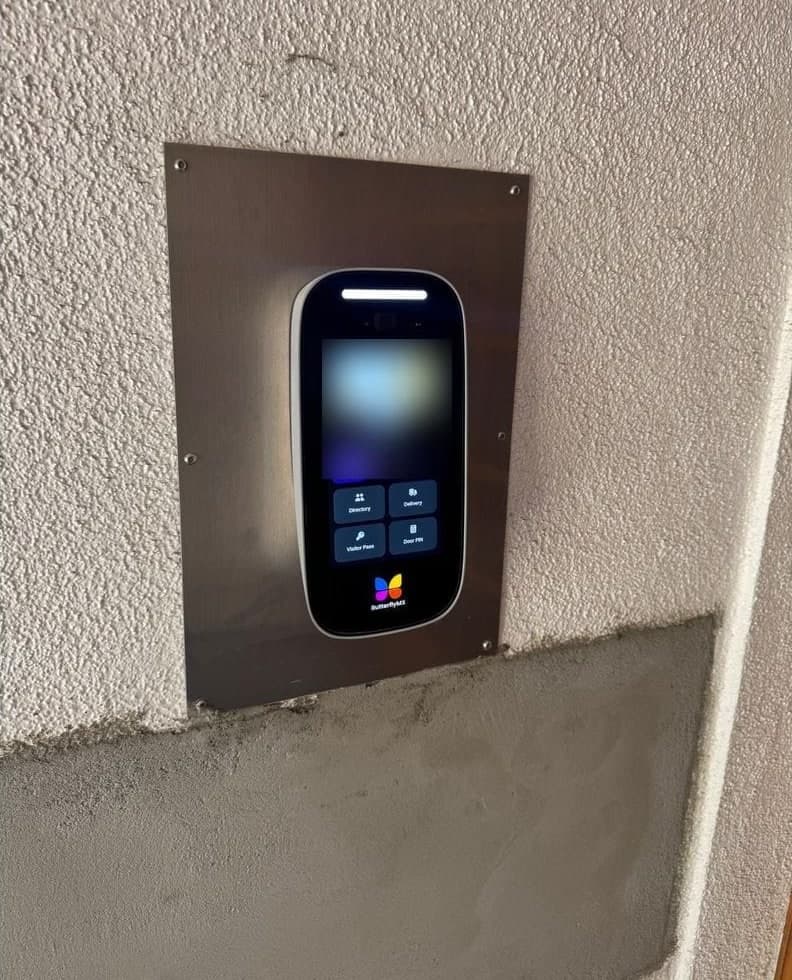
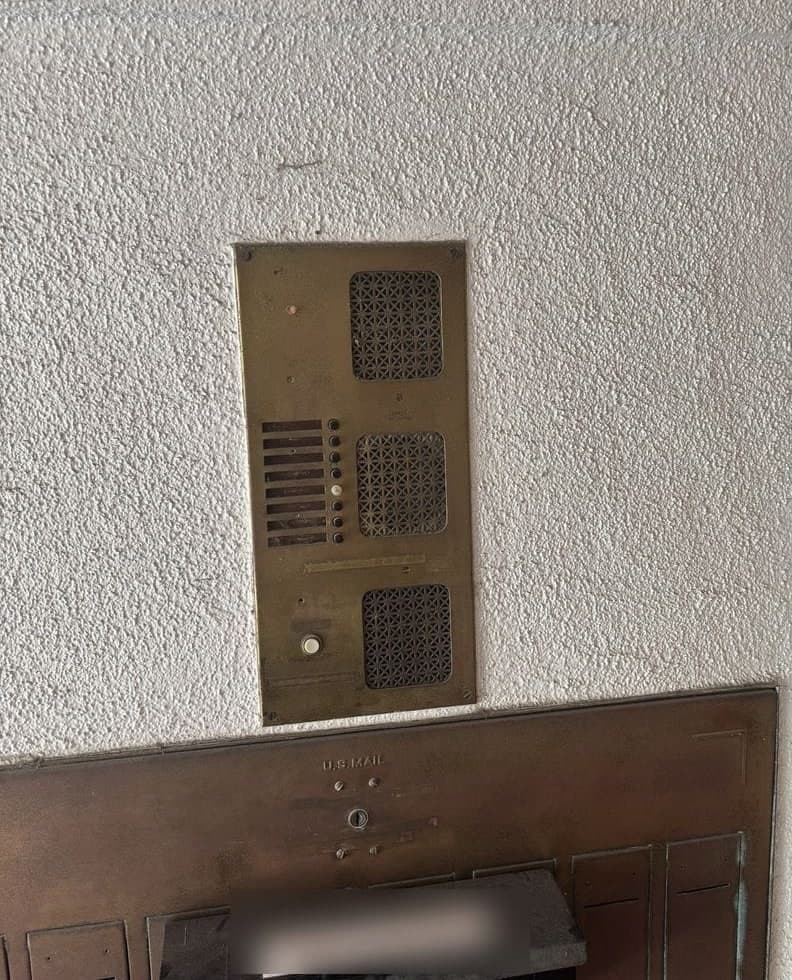
Before: a brass multi-button buzzer panel on a stucco wall above a brass mail panel. After: a ButterflyMX touchscreen video intercom on a stainless plate in the same wall.
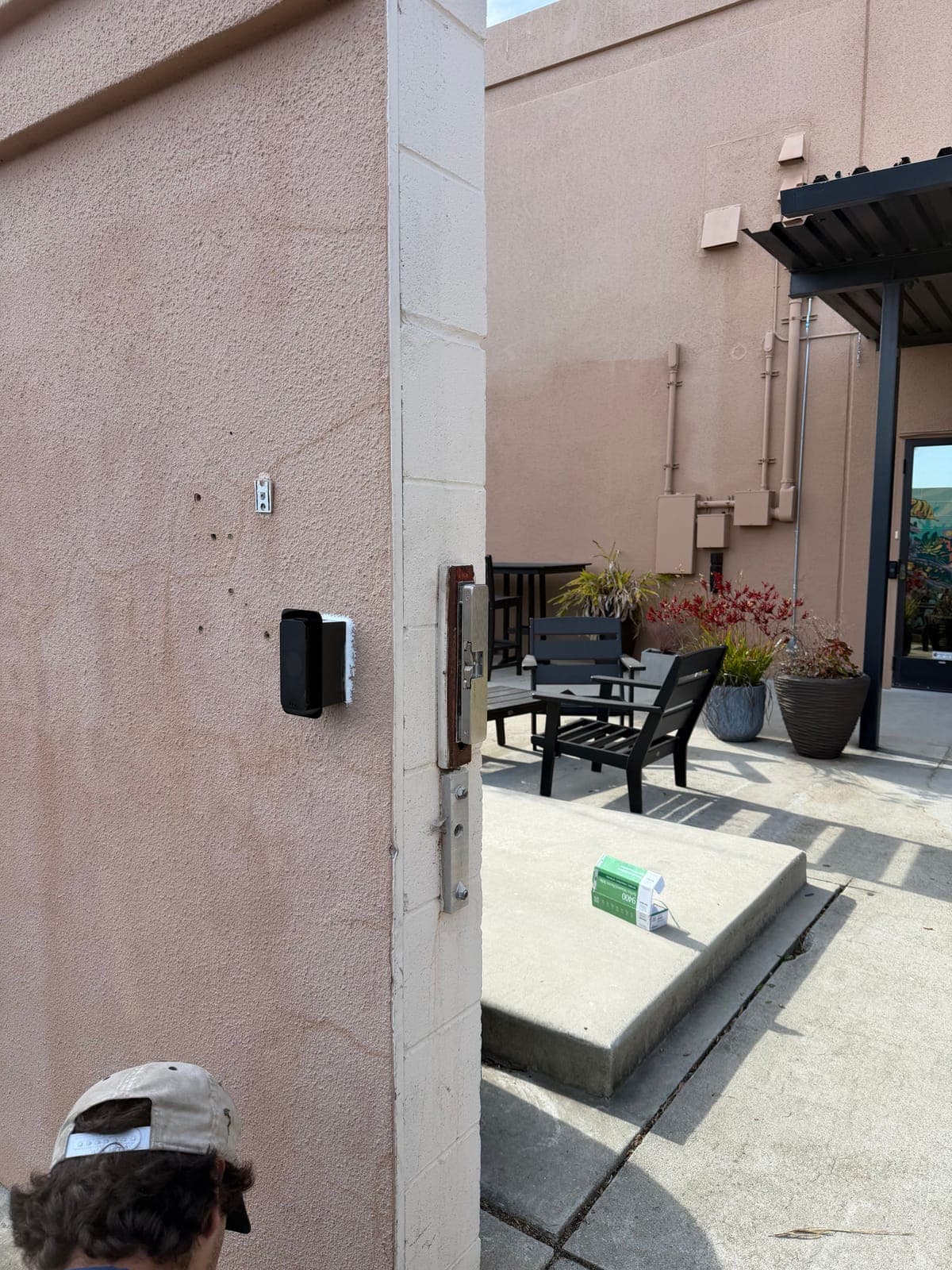
A reader on the stucco wall beside a courtyard gate post, with lock hardware mounted on the post edge and patio seating beyond the gate.
The local AHJ or an attorney decides whether and how an intercom requirement applies to a specific building, and Elwin plans and installs the intercom and door release.
Site walk
Tell Elwin what is not working, what systems are already on site, and which access points matter most. The next step is a scope grounded in the building, not a generic product list.