
New OpenEye installation
Cameras, an OWS recorder or OpenEye cloud cameras, PoE, cabling, mounts, and an OWS license tier, planned around entries, garages, and corridors.
Platform focus
Elwin Security installs, configures, repairs, replaces, and supports OpenEye cameras and OpenEye Web Services (OWS) recorders for commercial and multifamily properties in Santa Clara and the San Francisco Bay Area. OWS is OpenEye's cloud-managed video platform: it pairs cloud management with local recording on a recorder at the property, or with onboard recording on OpenEye's cloud cameras. Request a site walk and Elwin will scope cameras, recorder, PoE, cabling, and licensing from the building.
Use case
New OpenEye systems, migrations onto OWS, and equipment replacements each start from different existing conditions. The site walk begins by confirming which one applies.
Cameras, an OWS recorder or OpenEye cloud cameras, PoE, cabling, mounts, and an OWS license tier, planned around entries, garages, and corridors.
OpenEye states that the open architecture of OWS lets you use your existing IP cameras, and its OE-MB appliance supports up to 16 channels of analog video for retrofit applications. Elwin checks which existing cameras and cable runs can stay.
Elwin replaces that equipment with OpenEye models OpenEye marks as NDAA compliant.
Service focus
Camera power draw, recorder PoE load, channel limits, onboard storage, and license tier are published by OpenEye. The site walk adds the building conditions those numbers have to fit.
The OE-C1011D4-S indoor micro dome and OE-C1016T2-S outdoor turret each list PoE (IEEE 802.3af) or DC 12V as the power source. Their published maximum draws are 4.5 W, 5 W, 6.5 W, and 9.6 W. Elwin sums those draws against the switch's PoE load before setting the camera count per switch.
The OE-MT Gen 2 server lists 32 channels, 96 with upgrades, and up to 96 TB of storage.
OpenEye's OE-MB appliance lists a maximum channel count of 24 with up to 16 BNC connections, and OpenEye states OWS works with existing IP cameras. Elwin tests existing cable and recorder conditions before deciding what moves to OWS and what gets replaced.
Section 889 of the John S. Whether either applies to a specific property is a question for the property's attorney; Elwin replaces the cameras when the owner decides to.
Site walk
The walk ties OpenEye's published limits to the building: where cameras mount, how far cable runs, where the recorder lives, and which existing equipment stays.
Camera wattage against the recorder's PoE switch load, cable paths, conduit, and whether a separate PoE switch is needed.
Recorder location and ventilation, the dedicated camera network, the client network, and internet upload for remote viewing.
Make and model of each existing camera and recorder.
System layers
Each layer has a published limit. The scope has to respect each of them at once.
The OE-C1011D4-S spec sheet lists a 2.8 mm lens, 103° field of view, adaptive IR up to 98 feet, ONVIF Profile S, G, and T, and a microSD slot up to 512 GB. The OE-C1016T2-S and OE-C2212B4 are rated IP67 for outdoor mounting.
The OE-CC51D8 is an 8MP outdoor dome with onboard recording on a 1 TB or 1.5 TB microSD card, IP67 and IK10 ratings, and a 22 W maximum draw on PoE+ (802.3at). On 802.3af PoE its internal heater is disabled. OpenEye's cloud camera quick start guide requires an available OWS license as an initial step before installation.
The OE-MD Gen 3 has separate client and camera network interfaces; its camera port runs a DHCP server and is intended only for a dedicated independent camera network on its own switch. The OE-MDX08 holds one drive up to 16 TB and the OE-MDX16 two drives up to 48 TB. Maximum operating temperature is 104°F.
Process
Elwin plans, installs, configures, and supports the system as the single accountable point of contact from site walk through installation and support.
Confirm camera positions, cable paths, recorder placement, PoE load, channel count, existing equipment, and the OWS license tier. Model numbers in the scope come from OpenEye's spec sheets.
Result: A written scope with model numbers and license tier.
Mount cameras and junction boxes, pull cable, land camera runs on the recorder's built-in PoE ports or a separate switch, and place the recorder on its dedicated camera network.
Result: Cameras powered and recording at the property.
Set the recording mode, assign OWS licenses, set user permissions, and walk the property team through OWS.
Result: The property team can view, search, and export video.
What matters
These are the terms OpenEye publishes on its warranty, licensing, and country-of-origin pages.
The cited OpenEye warranty page lists five years on fixed cameras and five years on recorders, effective on qualifying products.
OpenEye's license agreements page states that a subscription license expires with the passage of time, after which the software may no longer be used, and that some functionality will be lost upon the expiration of the associated OWS subscription.
OpenEye lists country of origin as Taiwan (OE-MD Gen 3), Republic of Korea (OE-MB), and China (OE-C1016T2-S, OE-C2212B4, OE-C3011D4-S). OpenEye marks each of these models NDAA compliant.
OpenEye states that OpenEye Web Services (OWS) platform software is made in the USA by OpenEye.
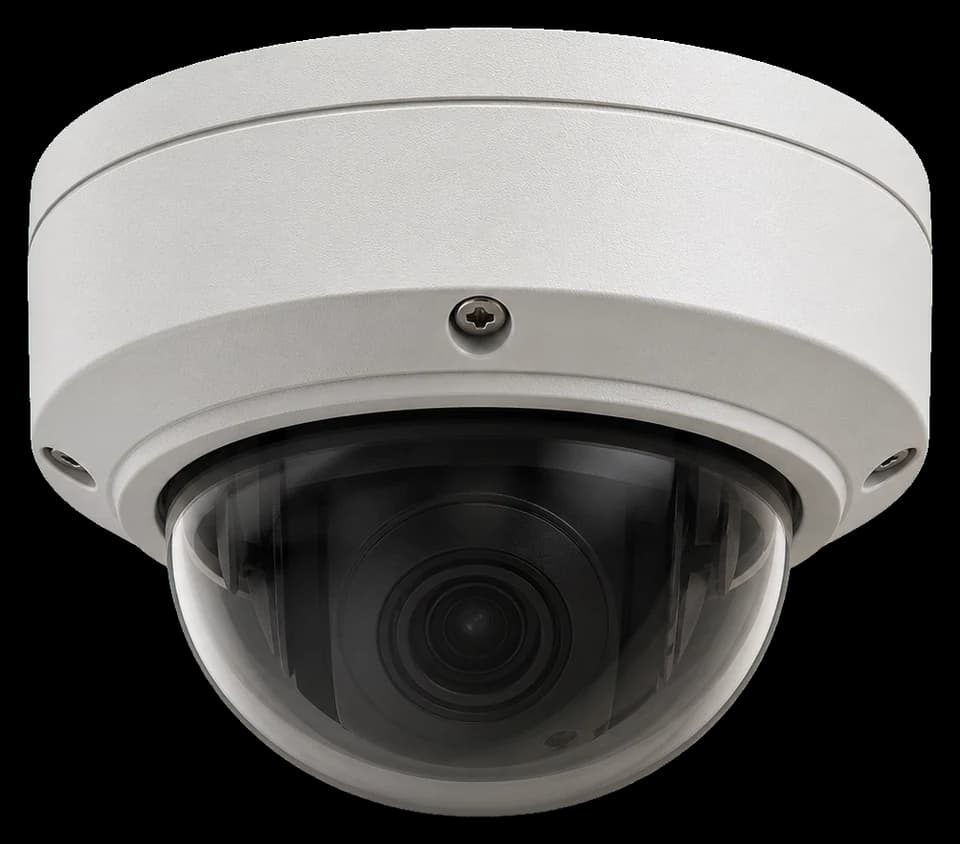
A dome camera body with a tinted cover; the lens is visible through the dome.
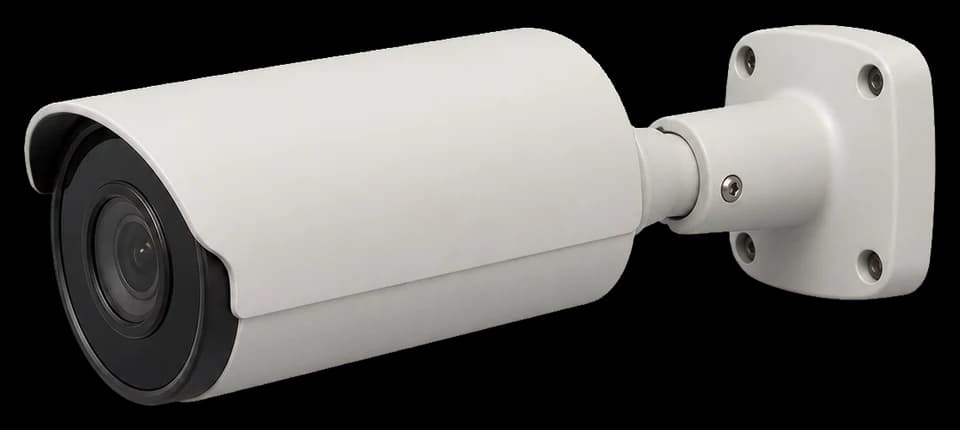
A bullet camera body on an articulating wall-mount bracket, with a sun shield over the lens.
Yes. Elwin Security installs, configures, repairs, replaces, and supports OpenEye cameras, cloud cameras, and OWS recorders for commercial and multifamily properties in Santa Clara and the San Francisco Bay Area. Request a site walk through the contact page or call (408) 539-0535.
Site walk
Tell Elwin what is not working, what systems are already on site, and which access points matter most. The next step is a scope grounded in the building, not a generic product list.